
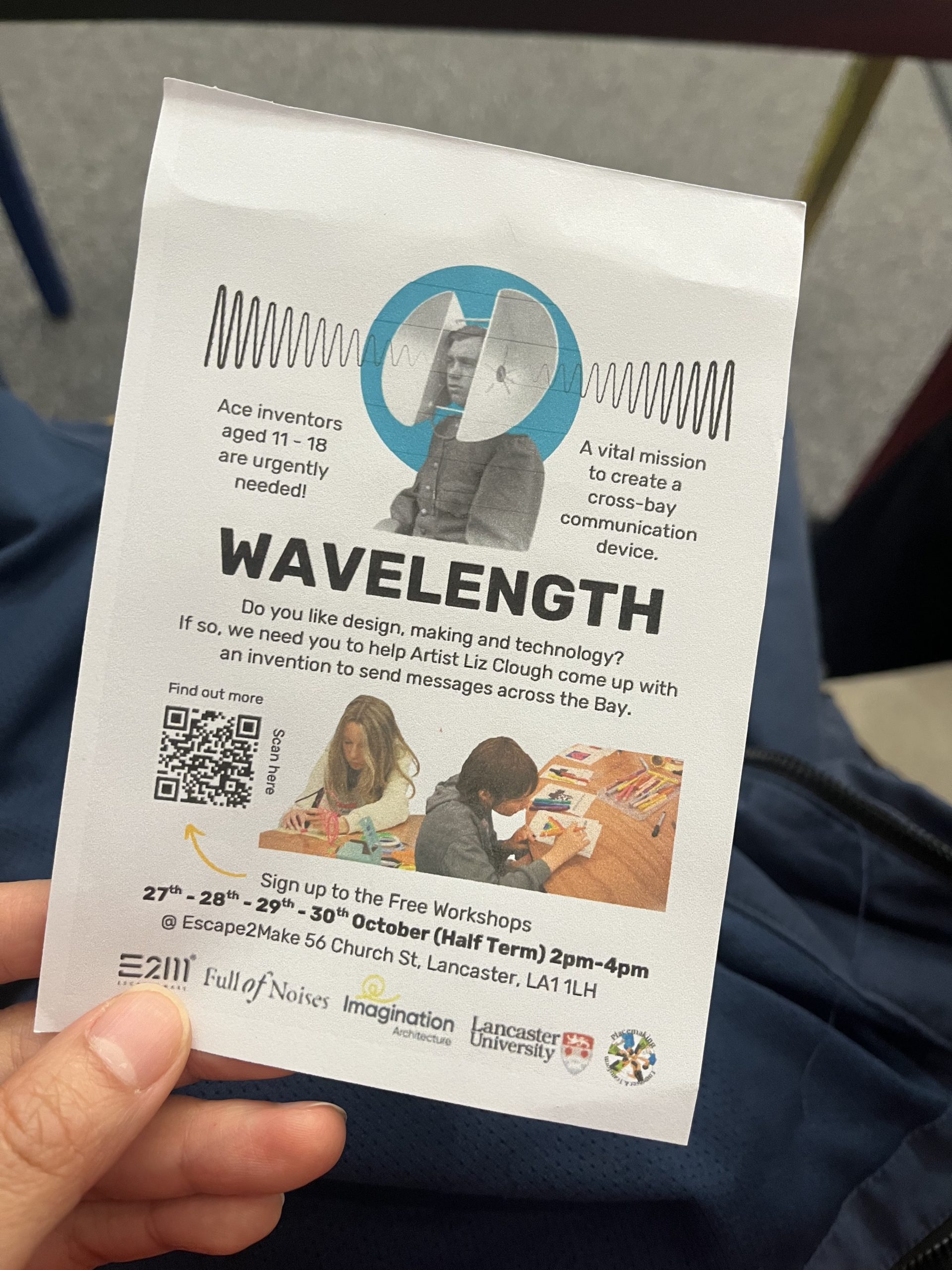
On the 27th of October 2025, we launched the first workshop of Empower & Transform through Placemaking’ project. This creative arts initiative is run in collaboration with the Lancaster based organisation Espace2Make, Barrow based organisation Full of Noises, and expert facilitator and artist Liz Clough.
The project’s target population focuses on young people aged 11-18 in the Morecambe Bay region. This diverse group will bring varying encouragement to young people (aged 11–18) to explore and reimagine places through creative and artistic methods, while applying placemaking principles in real time. Over the course of four days, participants will collaborate to create a ‘cross-bay communication device’. Together we will learn how young age groups make sense of placemaking principles and apply to their immediate surroundings.
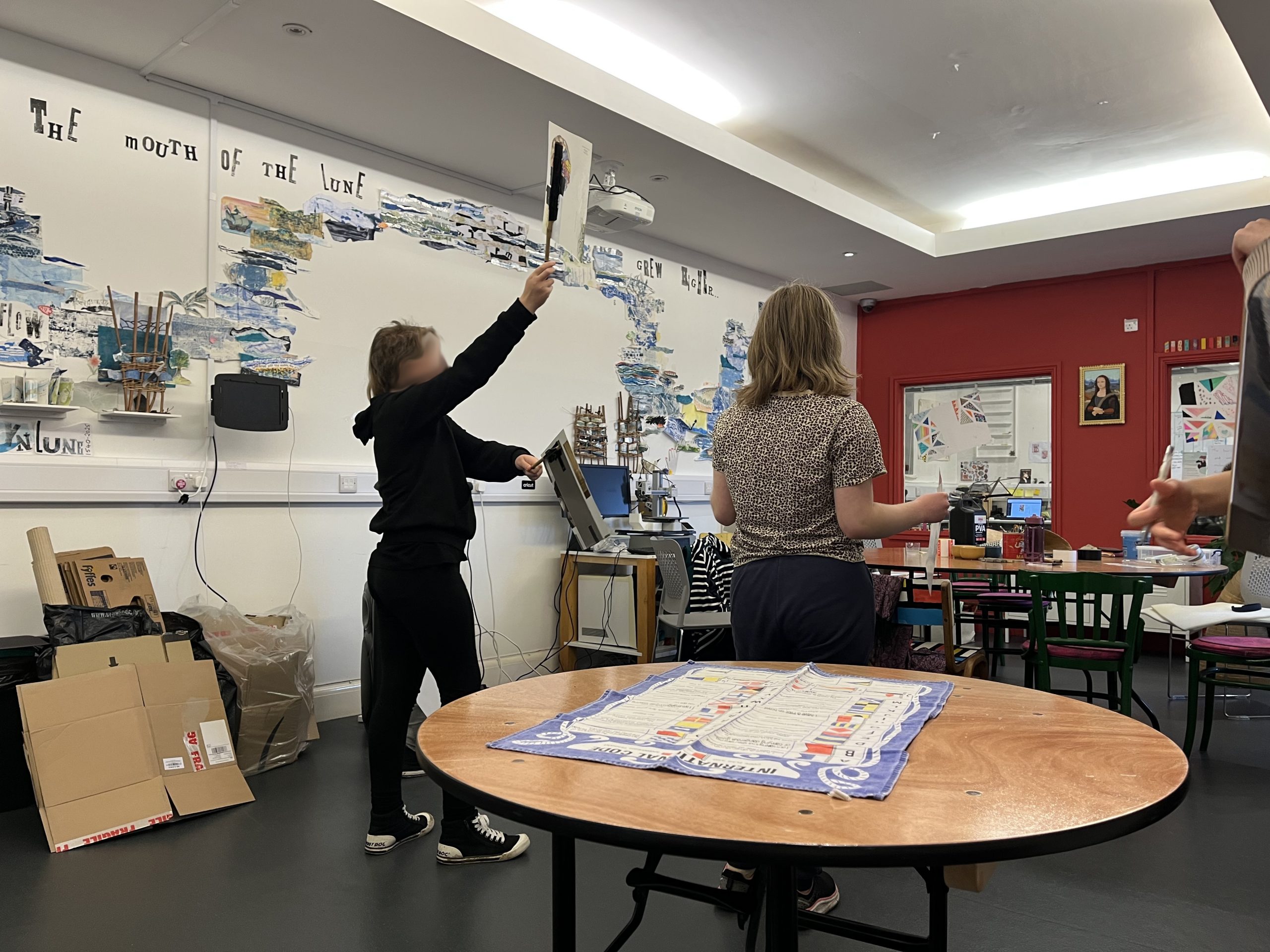
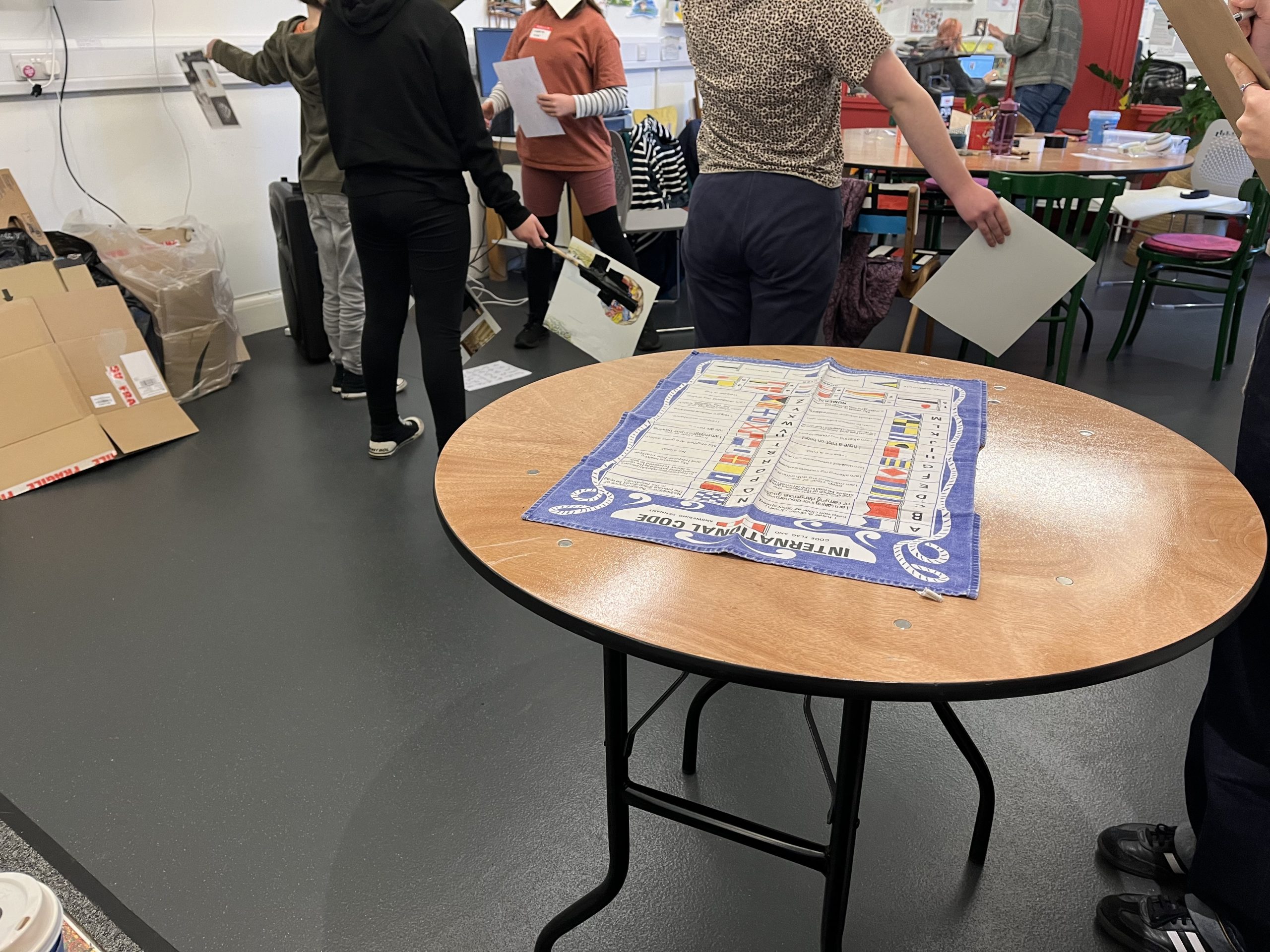
In this opening session, we welcomed seven participants from Lancaster and Morecambe to the E2M space in Lancaster city centre. They took part in a playful and exploratory “art-lab” workshop led by Liz Clough for two hours, during which they devised, prototyped and shared ideas for their listening-communication artefacts, which focus on designing and using spaces meaningfully.
Activity Procedure:
Several key patterns emerged during the first session. Firstly, the level of engagement was striking. As soon as the workshop began, participants gathered around the materials bench, which was stocked with scissors, tape and recycled parts, showing a high degree of curiosity even before the formal briefing or introduction. When Liz invited them to explore ‘sound codes’ and ‘message pipes’, the room lit up with laughter, hands-on experimentation and sketching.
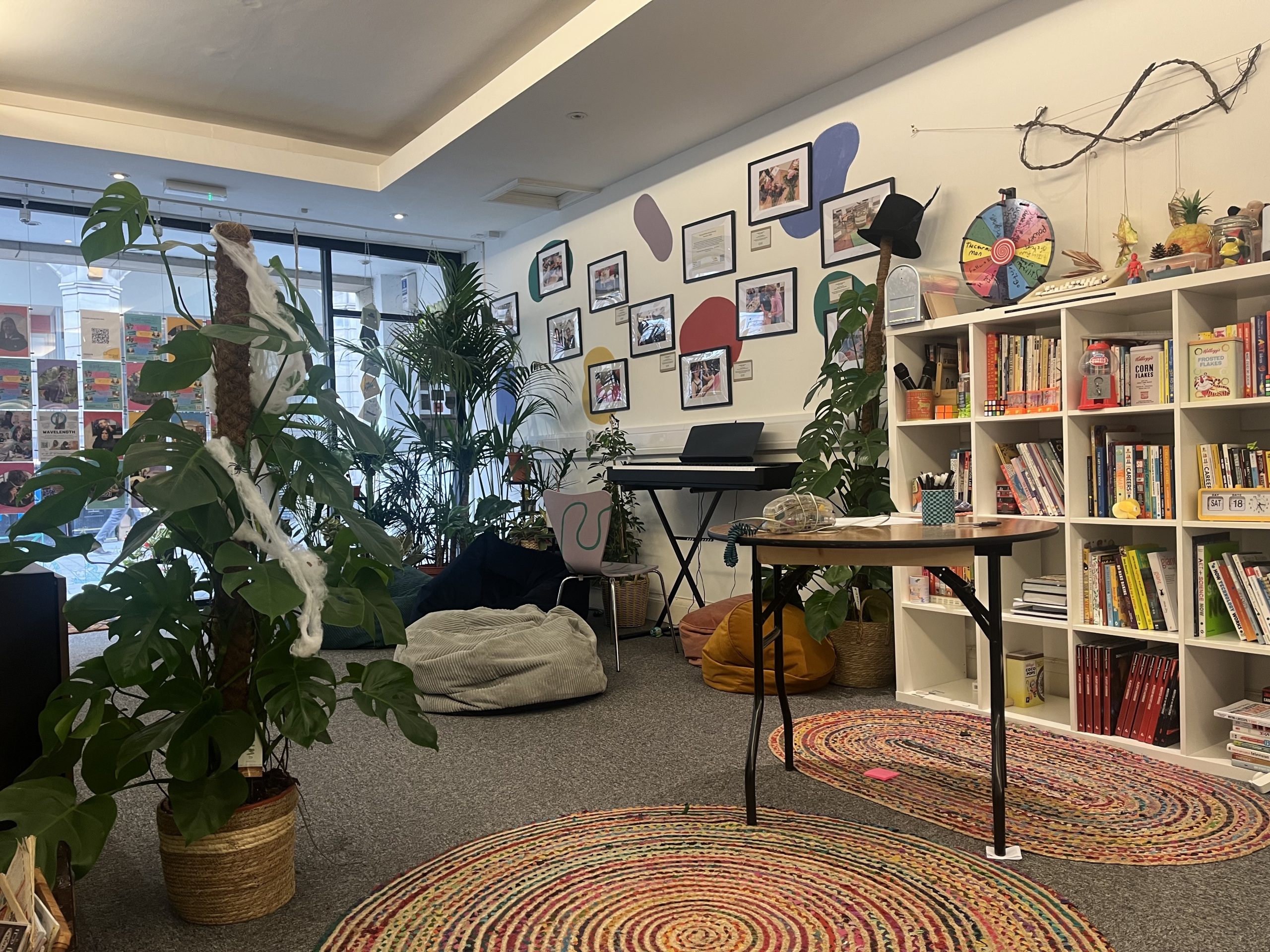
Secondly, the workshop’s dynamic interior space provided rich material. Initially, most participants gathered around the workbench (the collaborative zone). After 35 minutes, they formed groups to experiment with Morse code (light and sound) and gradually moved outwards from the collaborative zone. They then moved to the indoor plant/resting area, where they browsed materials and conducted quiet group testing of the installations. Their movements formed a visible practice of creation, dialogue and contemplation. During the final game phase, social interaction intensified rapidly. Rather than being directed, participants were guided by Liz to gradually converge from the collaborative and relaxation zones towards the central area, forming transient spatial hotspots. She facilitated naturally emerging peer interactions and autonomous prototyping.
Social interaction unfolded rapidly during the game’s final stage. During the final activity, the two groups swapped games and discussed them. The process, and participants gradually converged from the collaborative and relaxation zones towards the central area of the space, forming a temporary spatial hotspot. Natural peer interactions and discussion prototype design was then done.
Insights:
- Young participants entered the space and began exploring it with curiosity.
- They showed curiosity about the equipment and tools, asking questions and actively experimenting with sound structures to engage with the activity.
- As tasks evolved, observations revealed that participants naturally transitioned from creation to engagement. They moved from group exercises to presentations, flowing between different indoor areas.
- The spatial layout guided participant movement.
- Collaborative relationships gradually formed, with some participants evolving from observers or listeners to actively engage in group discussions or practical activities. After the activity, interactions with other participants increased.
- Informal peer exchanges among group members effectively fostered mutual trust.
Future perspective:
This workshop aims to gather insights from young participants regarding their perceptions of, and practices in, interactive engagement and placemaking. By using creative methods to reshape the environment around them, we hope to strengthen young people’s sense of belonging to and responsibility for their community.
 Mirian Calvo
 Shuning Feng
 David Pérez
 Nuri Kwon