Project overview
This project investigates how residents in retrofit social housing in Lancaster District experience and integrate photovoltaic (PV) solar panels and energy storage (batteries) management into everyday life. By combining technical monitoring with resident engagement and co-design activities, the project aims to produce real-world evidence about what works, what doesn’t, and how to make decarbonisation technologies easier to use—so that comfort improves and energy costs and carbon emissions reduce over the long term.
Research Team
Prof Lori McElroy — HoD, University of Strathclyde
Dr Alejandro Moreno-Rangel — PI, University of Strathclyde
Dr Mirian Calvo — Co-I, Co-design Lead, Lancaster University
Muhammad Zaeem Farooq — Researcher, University of Strathclyde
Partners
Lancaster City Council
Green Rose
Founders
Centre for Net Zero High Density Buildings + UKSPF-funds
Aims
- Evaluate performance of PV + battery systems in selected social homes (real-world technical effectiveness and energy performance).
- Improve resident handover by developing a user-centred guide/toolkit so residents understand how to use systems effectively.
- Strengthen resident education and engagement by examining how knowledge and behaviour influence energy outcomes.
- Support policy and future funding: generate evidence to inform Lancaster City Council’s retrofit planning and strengthen future bids, including alignment with the UK Government’s Social Housing Decarbonisation Fund direction.
Research question
How effectively do PV and energy storage management technologies reduce energy costs and carbon emissions in retrofitted social housing—and how do resident understanding, handover quality, and daily behaviour shape whether residents can get the full benefits?
Research timelines and key phases
Total duration: 18 months
[1 September 2025 – 30 March 2027]
Phase 1 — Scoping, Setup & Baseline
Key activities:
Stakeholder engagement with Lancaster City Council to recruit households.
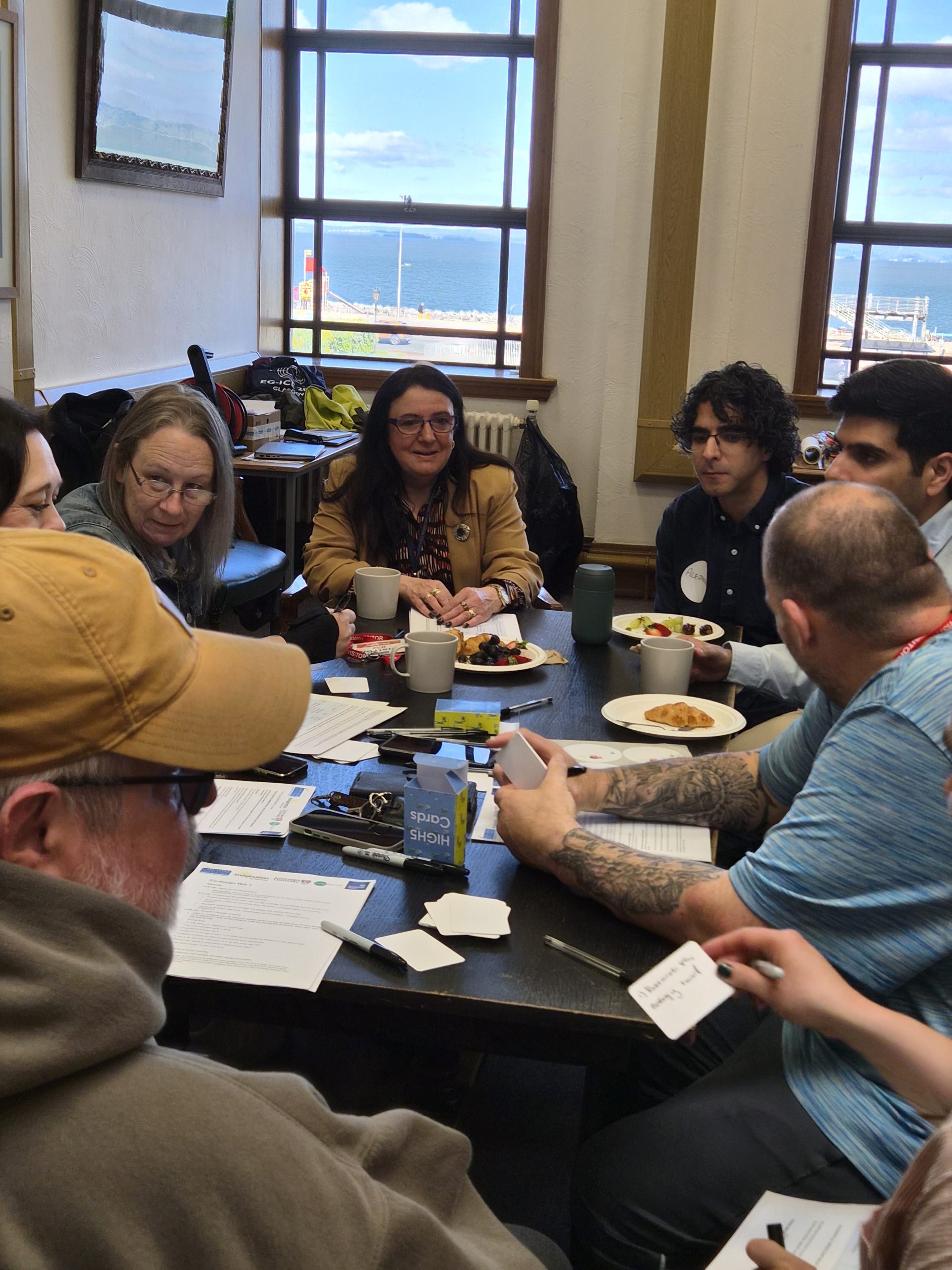
Resident workshop + baseline interviews to capture expectations and current energy-use behaviour patterns.
PV and battery installation in 4 pilot social homes (funding available through CeNZ-HDB + LCC).
Phase 2 — Data Collection, Engagement & Co-Design
Key activities:
Technical monitoring: quantify energy use and indoor environmental conditions.
Qualitative engagement: participatory design workshops to co-design improved handover materials.
Phase 3 — Evaluation, Recommendations & Dissemination
Key activities:
Impact assessment evaluating effectiveness of education/handover materials.
Finalise a replicable user-friendly tenant energy pack for local authorities and housing providers.
Dissemination: stakeholder workshop + academic outputs

 Mirian Calvo