How do you help young people feel that a place is theirs, especially when places are divided by the bay? In this project, we explored “placemaking” through art and experimental creative methods across young people on both sides of Morecambe Bay. The qualitative reflections shared by Lizzie Clough (facilitator and artist) and the focus group show that meaningful place connection isn’t created through facts alone. It emerges through shared experience, attention, and a safe space to experiment.
We began with context, not assumptions. Lizzie noted that place understanding deepens when you leave and return: “If you don’t leave a place, you don’t really know what that place is… as if you’ve left it and come back.” Her perspective on Barrow was especially important: the identity many people see (military industry) is only part of the story: “All anybody talks about in Barrow is industry… But then, before industry, Barrow was… farming, and fishing.” This emphasis on deeper context shaped how our young participants were invited to “read” their own surroundings.
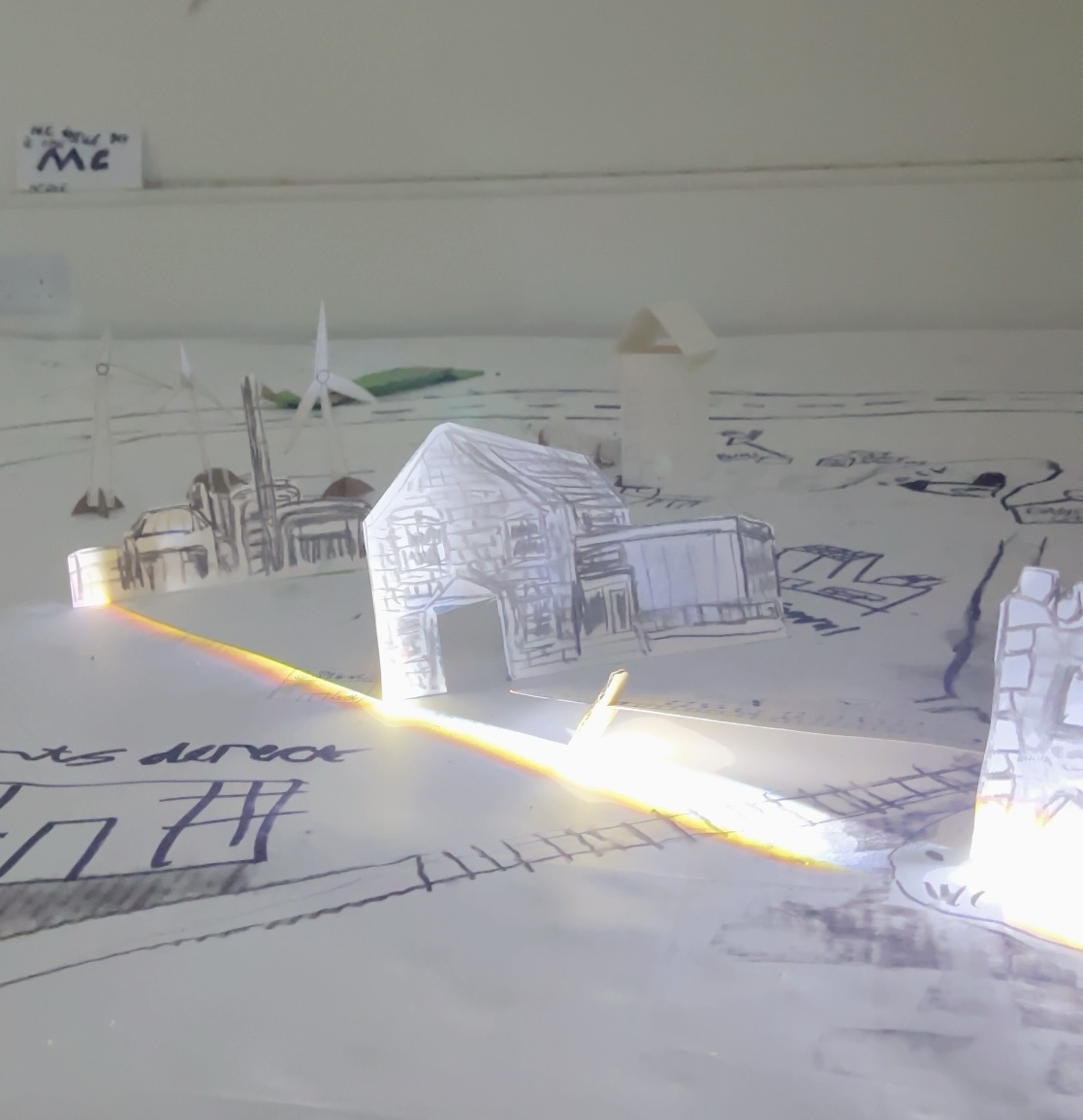
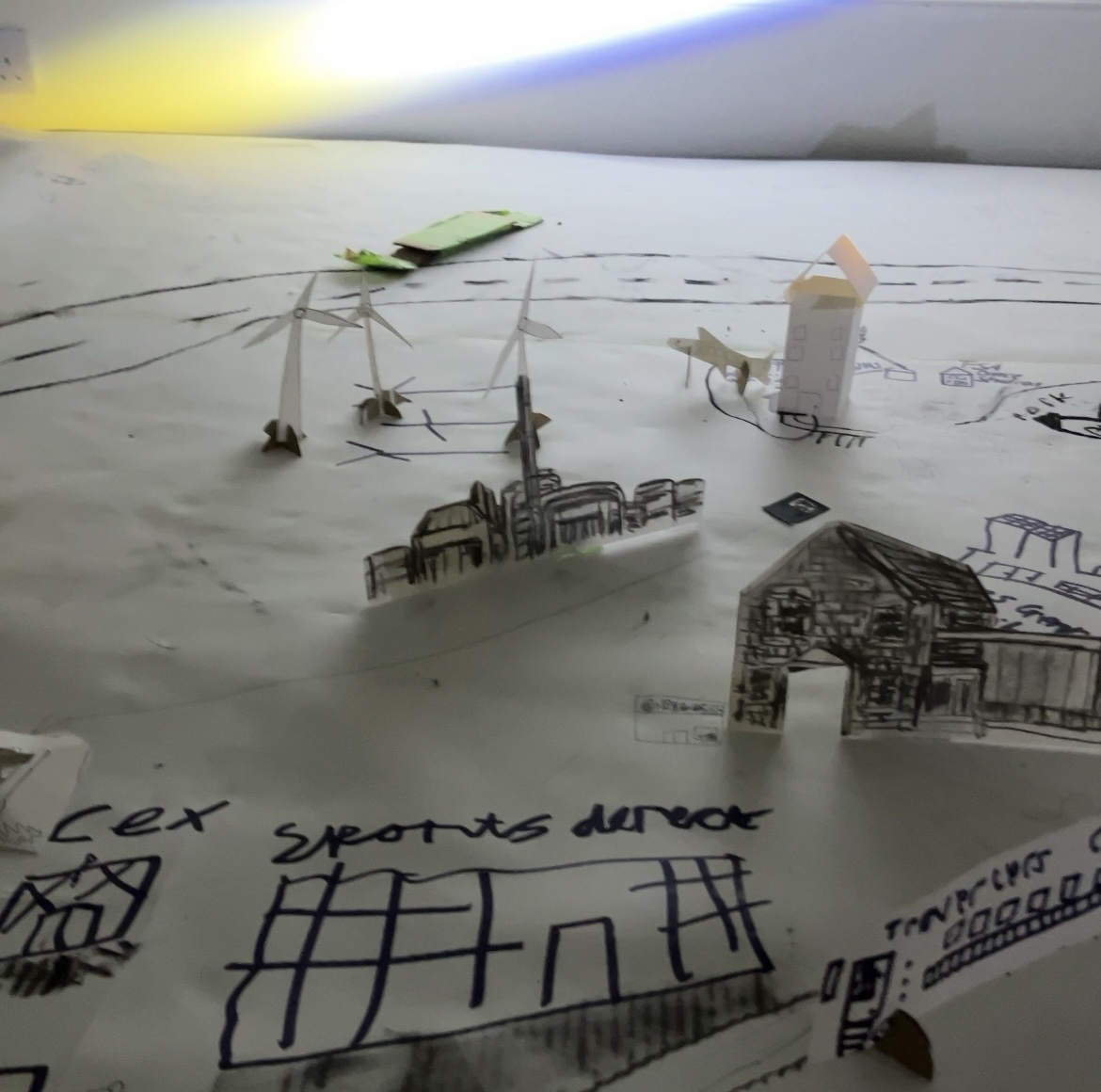
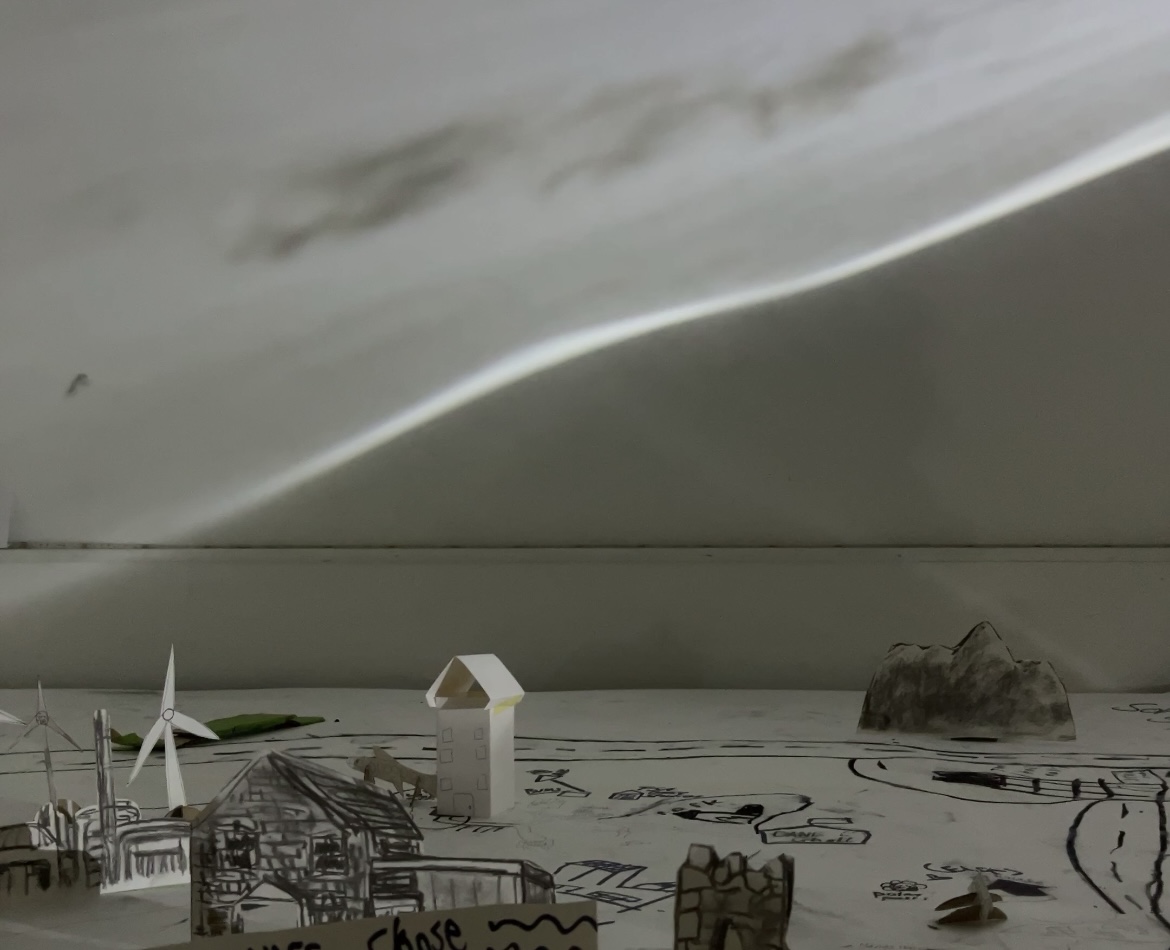
Mapping became the turning point: because it asked: “what matters to you?” The project’s map-making wasn’t designed to be accurate in an official way. It was more an orientation exercise:
“It wasn’t about getting it correct… It was about which direction things are in… Where do you live? What are you connected to?” (Lizzie Clough)
The focus group reflections highlighted a striking difference between adult and young people’s attention. Adults tended to talk about what the town lacks or how it looks from the outside. Young people mapped the everyday, the mundane, and made it meaningful. Amy Stretch Parker (from Full of Noises) said: “What they didn’t focus on is what adults often focus on…” and instead emphasised hyper-local details: “There are seven Gregs…this is what the kids mapped out”; said Glenn (from Full of Noises). Even familiar repetition (shops, routes, landmarks) became a kind of place-language for them.
Experimentation worked best when it had permission and boundaries. Across the reflections, “experiment” didn’t mean “no structure.” It meant freedom inside a framework. Lizzie explained the balance clearly: “You have to have a framework… and then you have to let them go and let them do.” The rest of the partners at the focus group nodded also and stressed that the value of the work lies in process and iteration, not only in the final product. Kriss Foster (from Escape2Make; E2M) said: “The exciting, important stuff happens in the process of making it.” We also challenged the language of failure, arguing for resilience through improvement: “Fail is actually… the wrong way… Iteration… should be celebrated.”
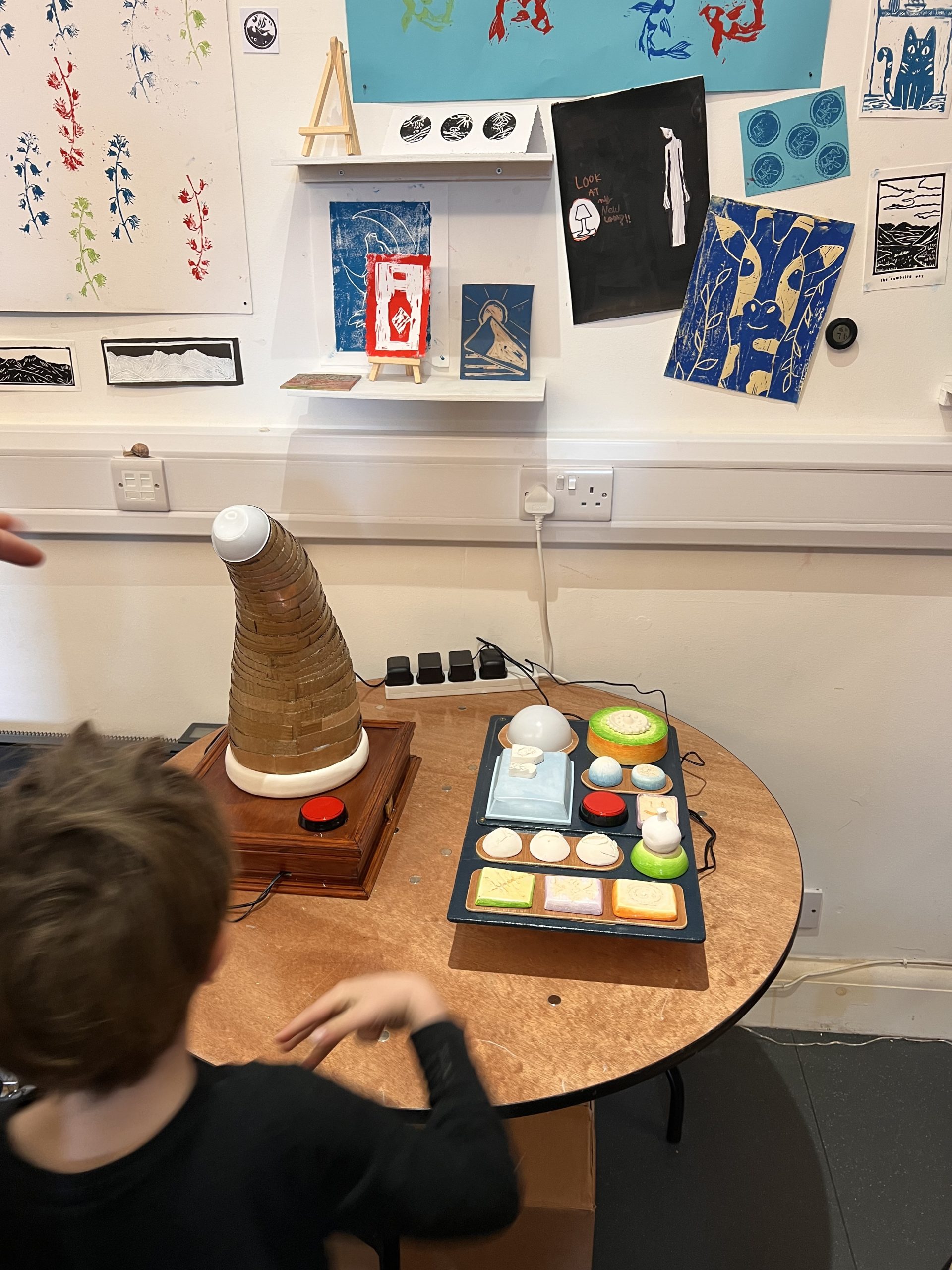
Space and facilitation shaped attention, confidence, and belonging. The research project compared different spaces for young engagement, creativity and placemaking. Lizzie described how a quieter, “neutral” space supported experimentation: “Full of Noises neutral space was really conducive of experimentation…” Meanwhile, Lancaster’s busier, multi-use setting required different facilitation and a careful balance between directed and non-directed time. The group also discussed how room layout (for example, round tables) can support inclusive conversation.
Finally, trust mattered, especially across the distance of the Bay. The focus group’s participants highlighted the psychological effect of separation: “The geographical distance of the bay… reinforce… the other end. It feels… quite a long way away.” Yet the project succeeded by creating conditions where young people and collaborators could join in with confidence: “Resources and permission are absolutely the golden ticket for great… transformative work and trust.”
Conclusion: This qualitative evidence suggests that placemaking becomes empowering when young people are invited to map lived experience, experiment within a supportive framework, and feel ownership of the process. In the Morecambe Bay context, that ownership is not just artistic; it is relational, spatial, and built through trust.

 Mirian Calvo
 David Pérez
 Nuri Kwon
 Shuning Feng