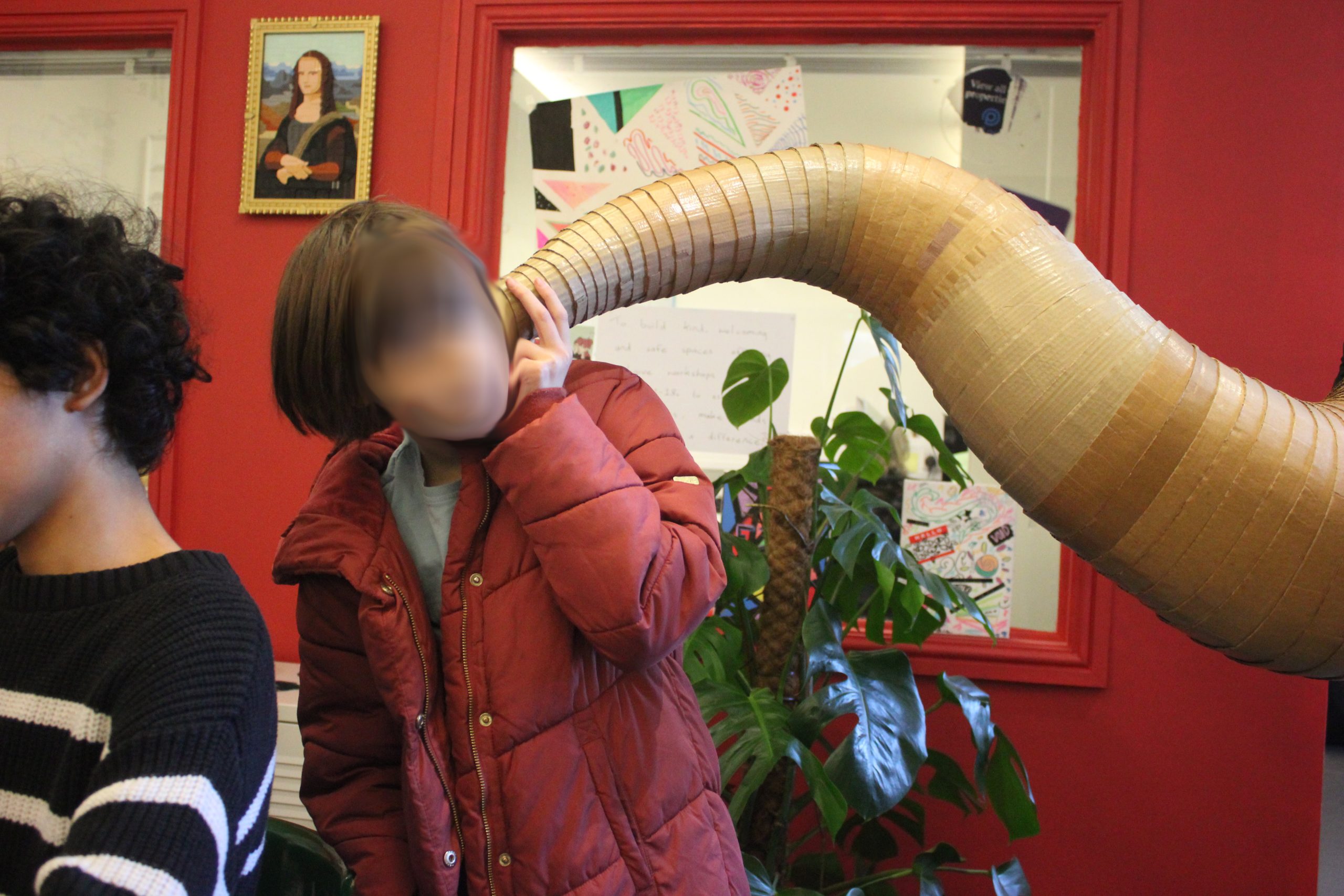
The workshop series concluded successfully on the 30th of October 2025, running from 27th to 30th of October. In this workshop, young participants explored how art, sound, and imagination can reshape perceptions of place and spatial experience. During the four-day programme, participants engaged in activities such as drawing, sound recording, and live fabrication, as well as imaginative discussions to conceptualise distinctive and intricate communication devices. The programme culminated to construct a successful communication prototype.
The second workshop promoted placemaking principles to young people, equipping them with foundational knowledge to become thoughtful and engaged stewards of their communities. Moving beyond the conventional view of young people as passive users of designed spaces, the project encourages them to become co-creators of place, demonstrating how creative expression can cultivate a sense of belonging, empathy, and agency.
Workshop 2: Reimagining Youth Participation Spaces
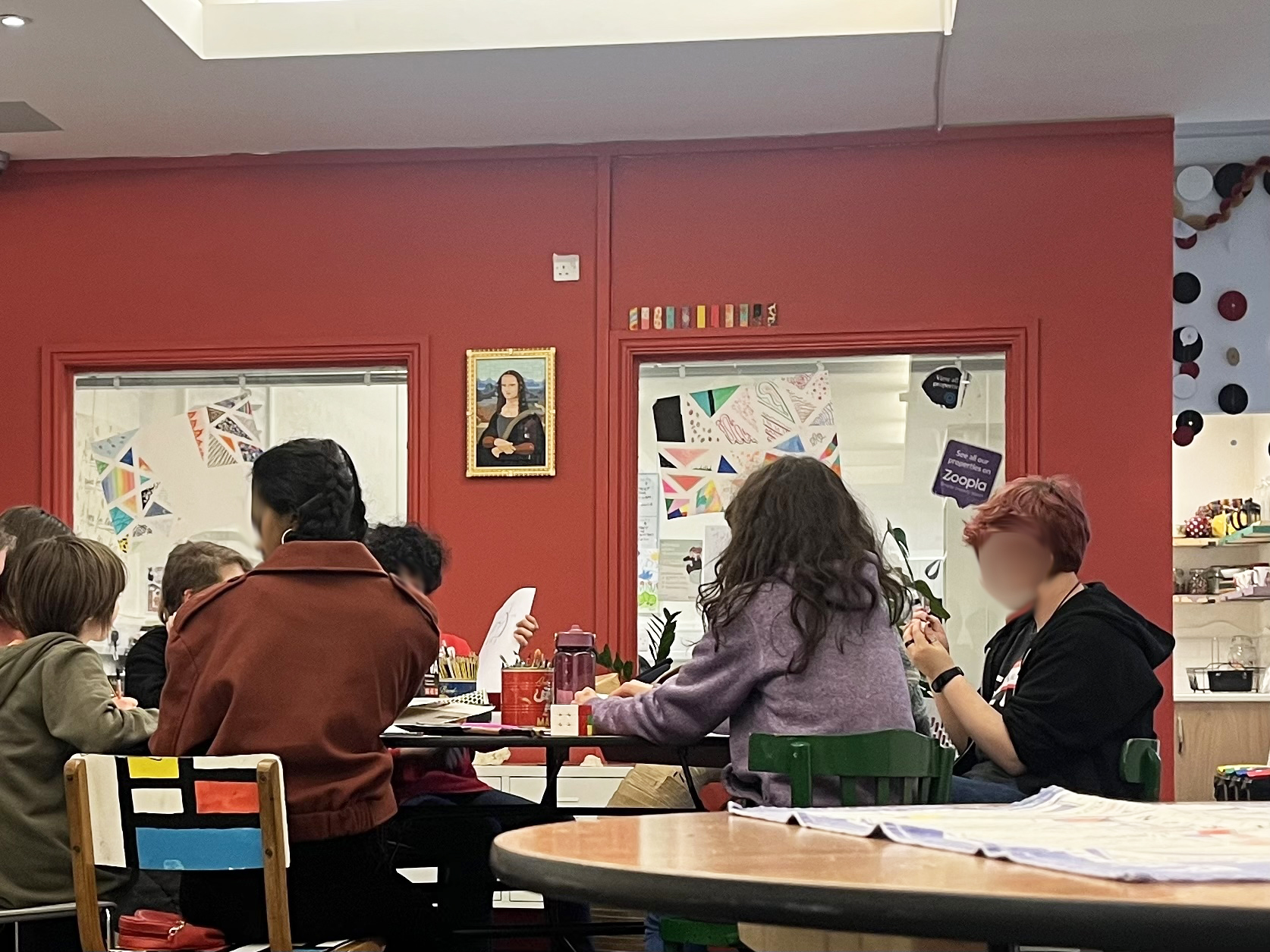
Site: E2M, a creative, welcoming, warm, and inclusive charity organisation based in Lancaster city centre.
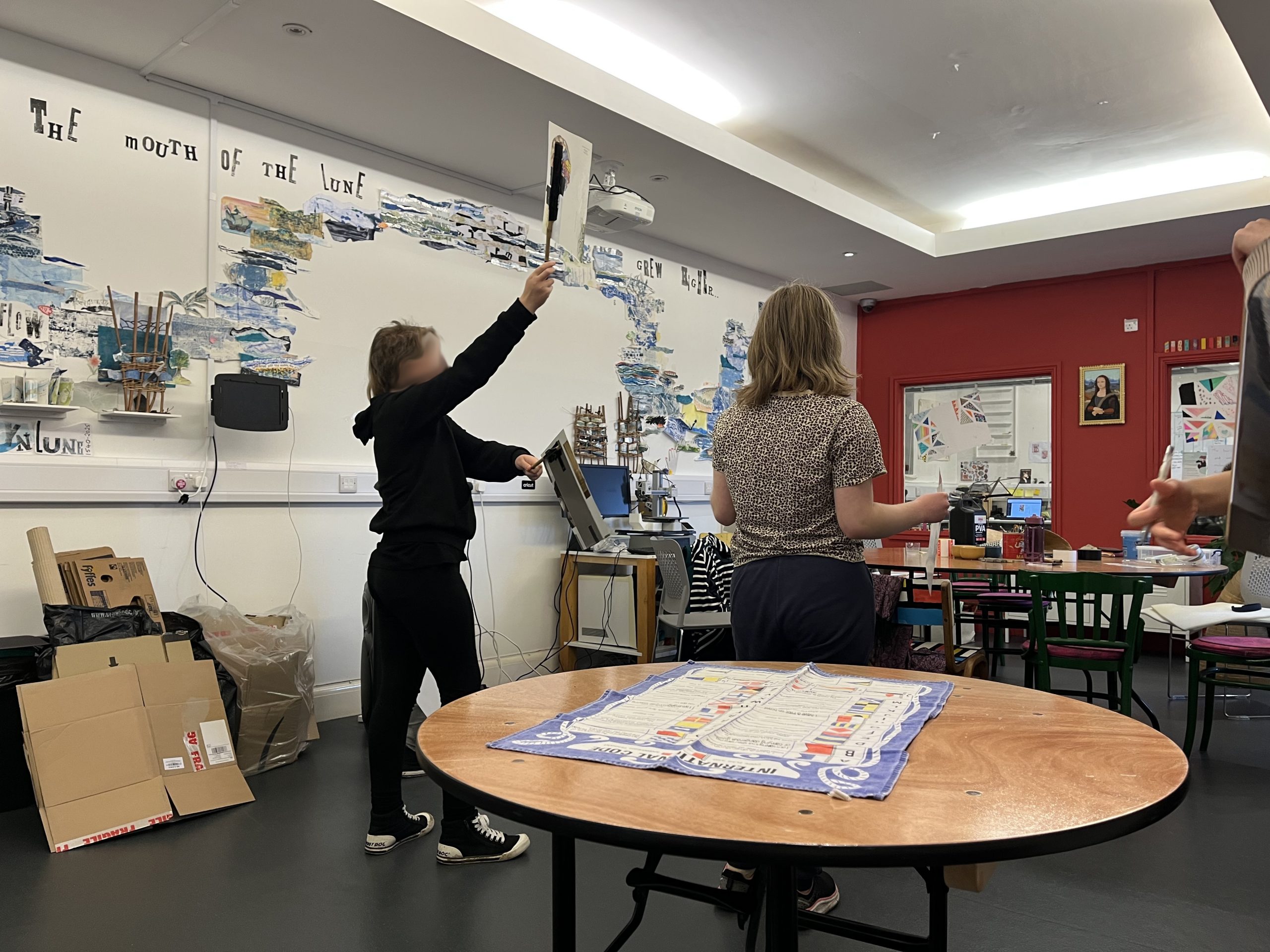
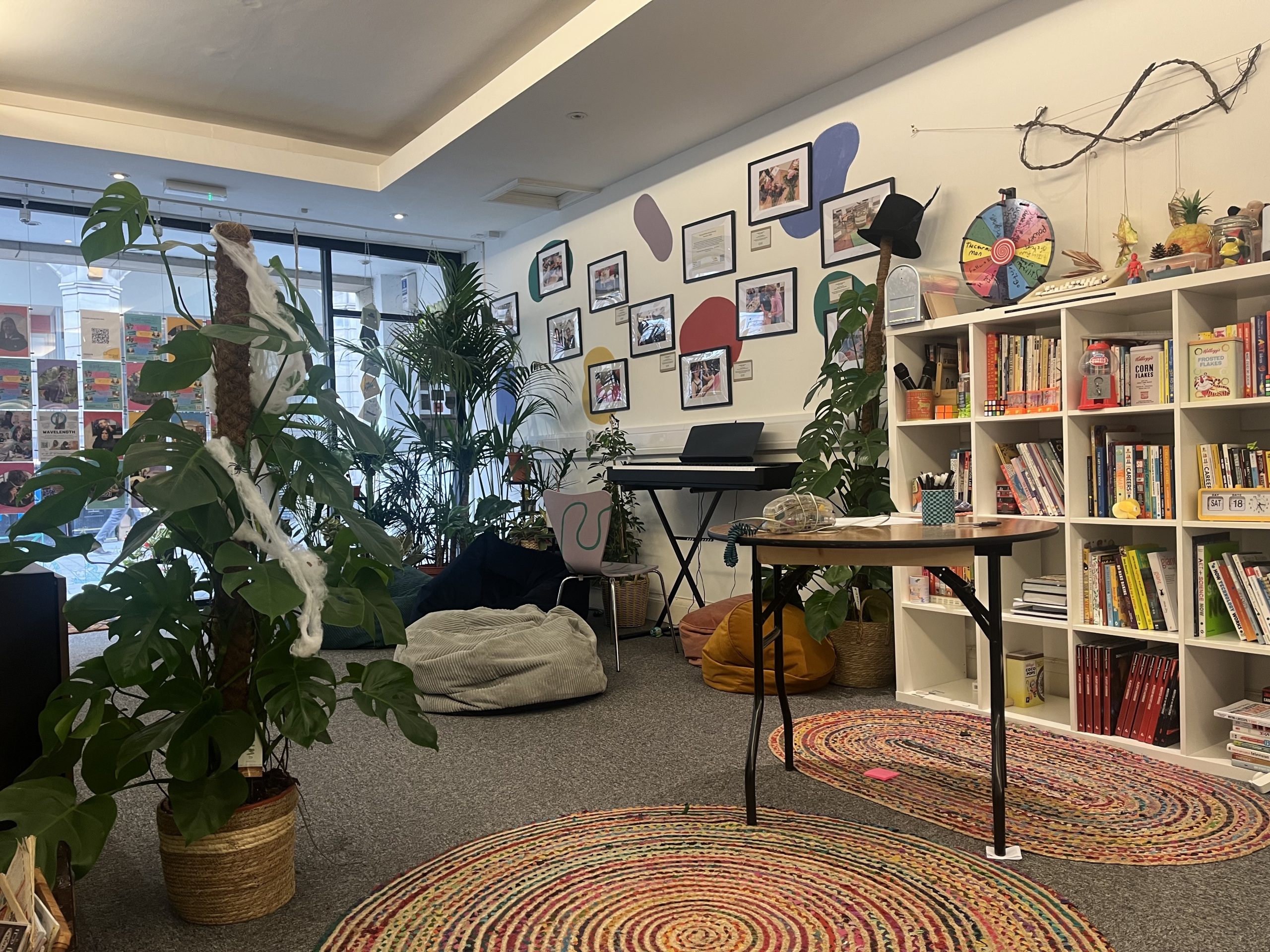
The workshop explored how placemaking theory can be applied and interpreted in a the context of E2M. The primary aim was to empower young people to express their ideas and actively participate in shaping their environments through hands-on placemaking activities. The spatial layout itself played an instructive role: circular workstations fostered collaboration; interior walls served as display surfaces, and plant-filled corners provided spaces for quiet reflection. Observing the movement of participants in place revealed how spatial design could shape, influence engagement, and stimulate creativity.
Liz Clough led and facilitated this workshop as well. One participant reflected,
“It felt amazing to see our ideas come to life. I never thought about how much art and design could change how we use a space.”
Although an observer, my role gave me invaluable insight into how young people create meaning collectively through spatial interaction. Their engagement demonstrated that placemaking with young people is not an impersonal planning exercise, but a lived, embodied process of creative exchange. From the outset, the participants demonstrated remarkable focus and collaboration, transforming the space into a dynamic site of exploration. The animated discussions around the tables were as insightful as the artefacts themselves, with every movement, sound, and spark of inspiration triggering new forms of communication and shared imagination. When a space is flexible and supportive, it becomes an active catalyst for creativity and connection, rather than just a backdrop.
In my observation notes, I wrote:
“Young people often have the greatest potential and capacity for focused, deep creation. They seek recognition and long for spaces where their imagination can take form. Every resonant exchange carries their voices—they long to be heard.”
By the final day, the participants’ prototypes had begun to take shape—sculptural listening devices that combined play and design. More importantly, the participants had also grown comfortable in the space, exhibiting their work, sharing outcomes, and developing a subtle sense of trust. While the seating arrangements remained unchanged from start to end, this consistency signified the quiet emergence of familiarity and attachment developed through shared practice.
One participant remarked, “I feel more connected to my community now, and I can’t wait to see what we create next!”
Placemaking provides an opportunity for transformation by allowing different groups to recognise community concerns within this framework and incorporate them into future for the area. This enhances collaborative outcomes, gradually making the placemaking framework more inclusive and diverse while incorporating additional voices where necessary. This process is an ongoing one, continually shaped by the curiosity and imagination of a new generation.
 Mirian Calvo
 Shuning Feng
 Nuri Kwon
 David Pérez