
On 4th June, 2025, young adults and planning officers joined researchers from Lancaster University at Lancaster and Morecambe College for an afternoon exploring one of Lancaster District’s most climate-vulnerable areas.
Before stepping outside, planning officers explained the site’s challenges – this area is a “food desert” where residents struggle to access fresh food. But the real game-changer came when videographers invited the group into their “igloo” – an immersive dome showing how an area of Morecambe will look in 2050, with the effects of rising sea levels. This wasn’t abstract policy discussion – it was frightening, putting climate adaptation and mitigation into sharp focus.
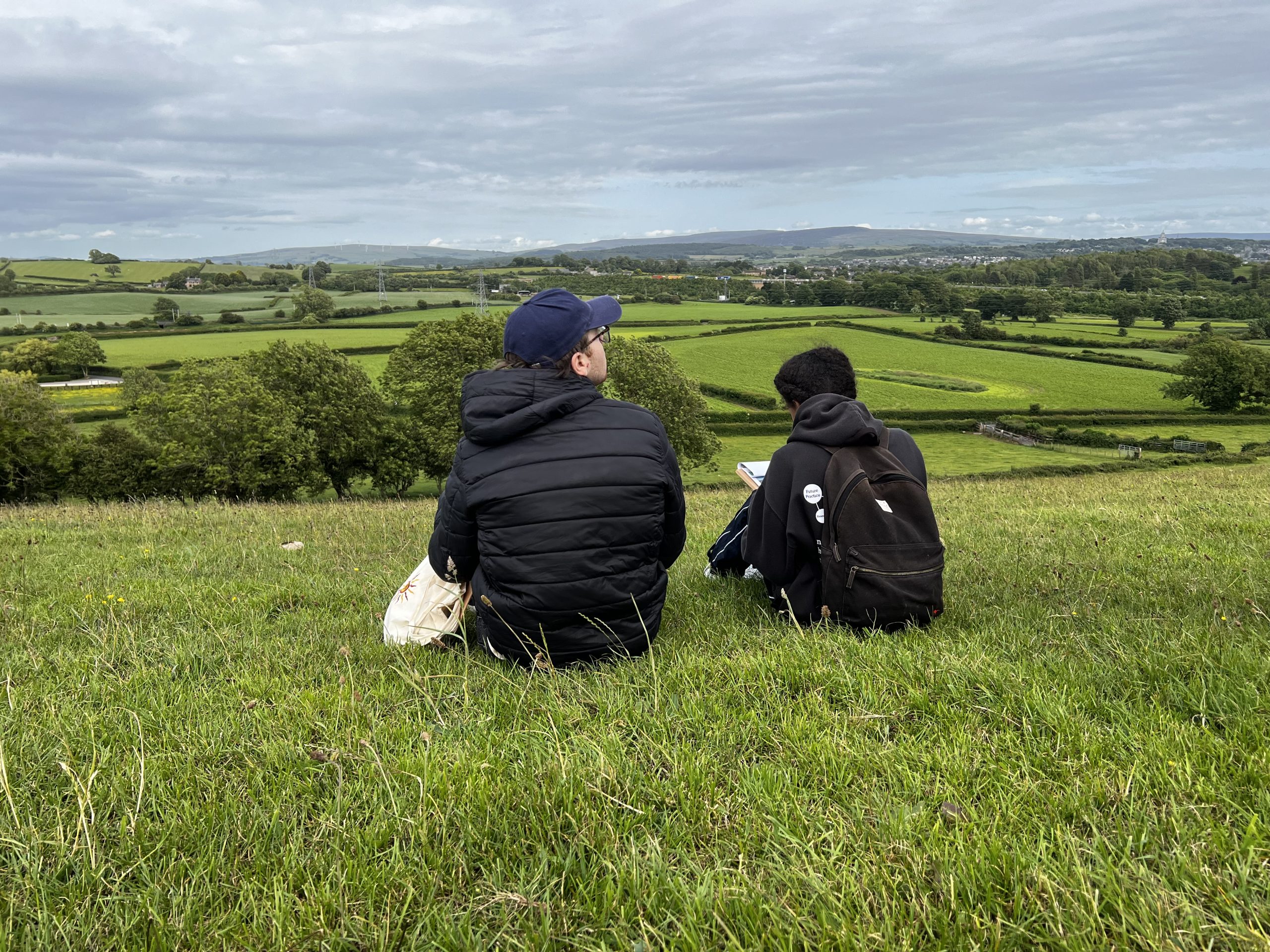
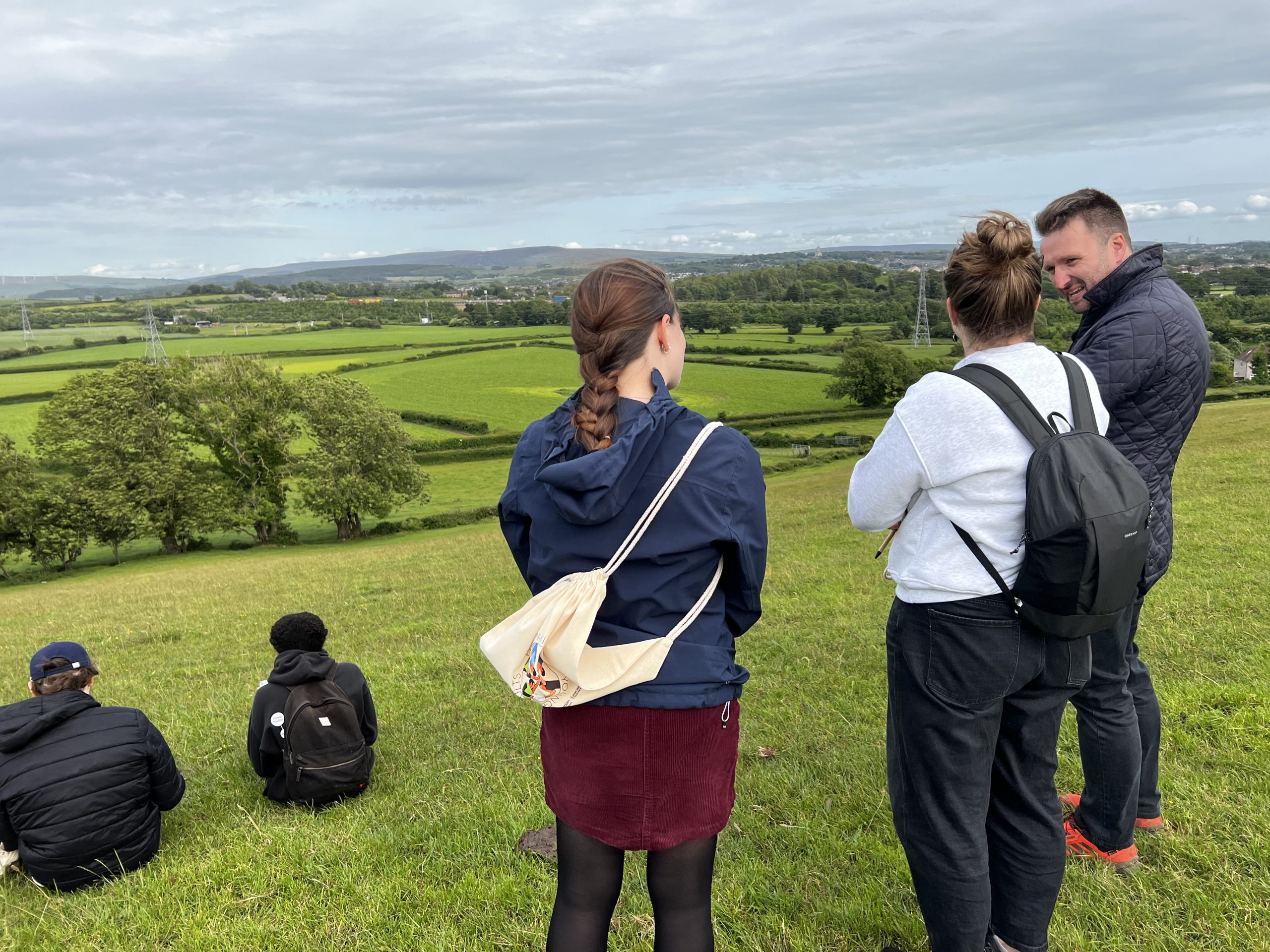
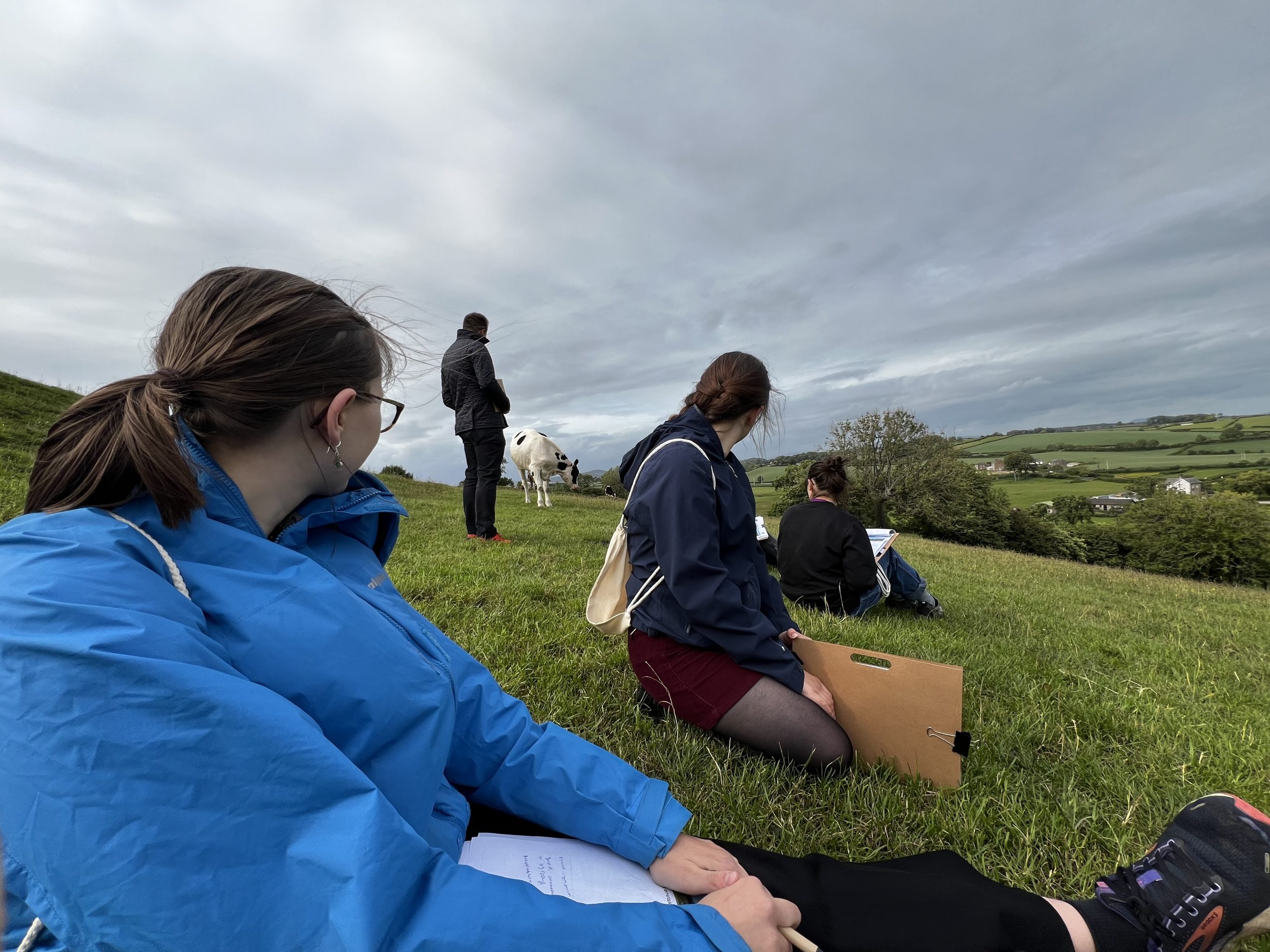
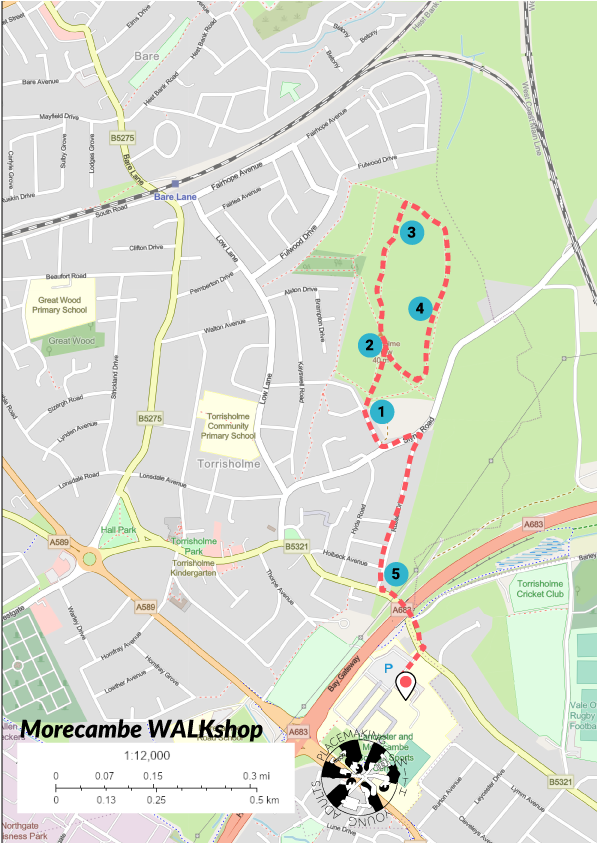
The group then walked from the college to Hexham Park, climbed Torrishholme Barrow (a neolithic burial site) for sweeping views across to the Lake District, and explored the site from the vantage point provided at the top of the hill.
Climate-Conscious Development
Climate awareness shaped every development discussion. “How do we make sure that it’s not contributing to making climate change worse and how do we make our developments and our buildings and our roads and our parks protect us from the impacts of climate change?” participants asked.
The challenge was that suitable development sites – avoiding the protected Neolithic burial site – were quite rural: “Some areas are sustainable for development…and which are still fine. And then you get out rural areas…where it’s just not a sustainable place to build any more houses.” Balancing development needs with sensitive environments became central: “We don’t want to build on sensitive places, but…how do you interact with those kinds of sensitive places when you’re thinking about new development?”
Blending Urban and Rural
Participants noticed how abruptly urban development meets countryside: “You can see where the urban form stops sharply onto the green/rural bit. So, how do you integrate that better and not have just a line where one bit stops, and one bit starts?”
This sparked discussions about thoughtful boundaries that blur rather than divide. Ideas emerged for “some sort of new lifestyle where farms or local farming with more urban style could merge together preserving certain areas” – maintaining productive land value while creating community spaces. The challenge was both physical and cultural: “How do we like hold on to that history while also building our future?”
Car-Free Communities and Community Spaces
The most ambitious discussion centred on car-free development. “The link between having car-free development and having the ability there to move,” participants noted, recognising this meant rethinking daily movement entirely.
Practicalities were floated: “You wouldn’t have car-free development if you couldn’t have bus or the pathways, the cycleways weren’t in place.” The group saw potential in existing infrastructure, like the “Lancaster Canal…can be used as a sort of sustainable travel corridor.”
However, current reality presents challenges: “Cycling and walking I think is quite a bit more difficult…we’ve got a lot of kind of barriers, main roads, busy roads, crossings, bay gateway.” This creates a chicken-and-egg problem where alternatives remain difficult because of the dominant system in place.
After the Walk
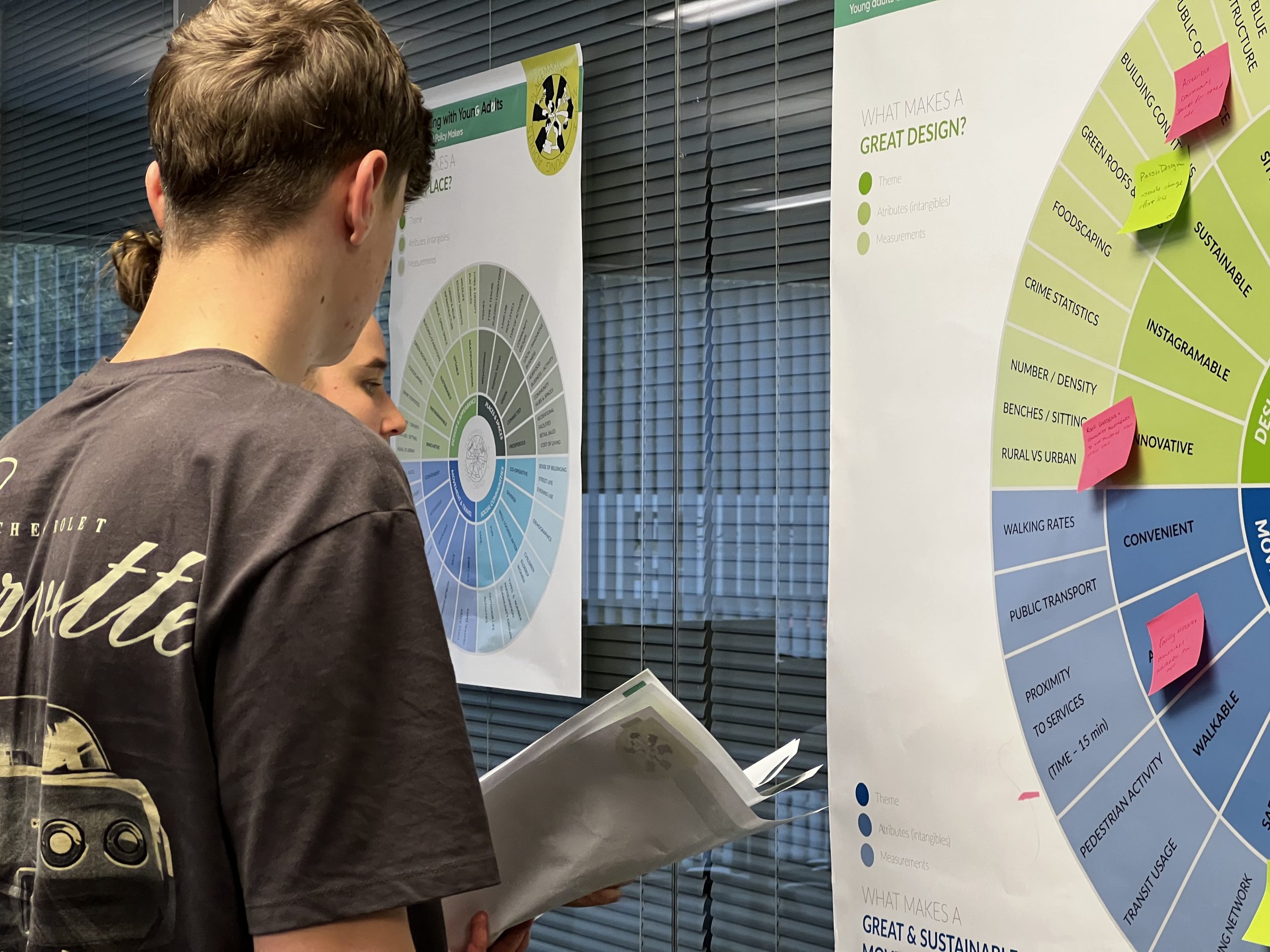
Over dinner back at the college, conversations became more relaxed and creative. The most animated discussion centred on roof gardens: “Does the garden have to be on the ground, or is it the same if it’s on your roof? Like, does it have the same feel, or does it change our perspective?” This wasn’t just about space – it was about preserving ground-level areas for community use while ensuring everyone had growing access and collective provisions,
What Made Morecambe Different
The immersive flooding video grounded discussions in reality. When walking through Hexham Park and Torrishholme Barrow, participants weren’t just seeing the lovely views of Morecambe Bay – they were seeing potential flood zones and climate adaptation infrastructure.
This climate reality check shaped our conversations. Unlike other walkshops where development pressures felt a bit more theoretical, or the climate crisis could feel a bit more abstract, Morecambe’s urgency was felt in the discussions had. The roof garden discussions, car-free development emphasis, and careful building considerations were all informed by having literally seen future challenges.
Looking Forward
The Morecambe walkshop demonstrated how powerful it is to start planning conversations with climate reality. By experiencing the future first, participants approached every challenge with genuine urgency and creativity.
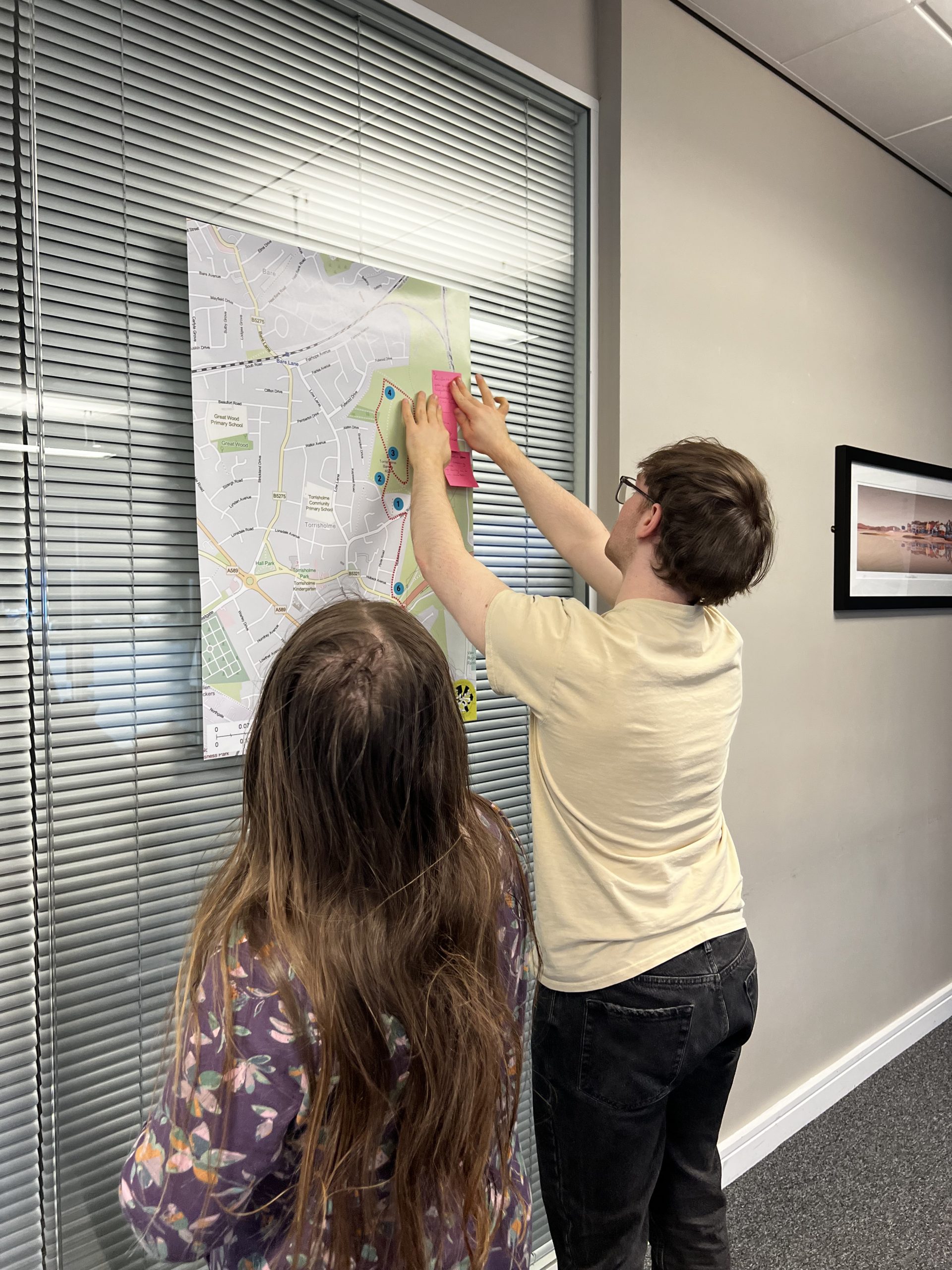
These insights will be compiled into a report capturing how young people envision climate-resilient communities. The research shows that given tools and space to think creatively, young adults are ready to reimagine how we live – from roof gardens preserving ecosystems to development prioritising community connection.
The walkshop format proved that planning discussions become richer when people experience places with their bodies, not just their minds. As Morecambe faces an uncertain climate future, these collaborative approaches offer hope for adaptive and ambitious development.
 Mirian Calvo