
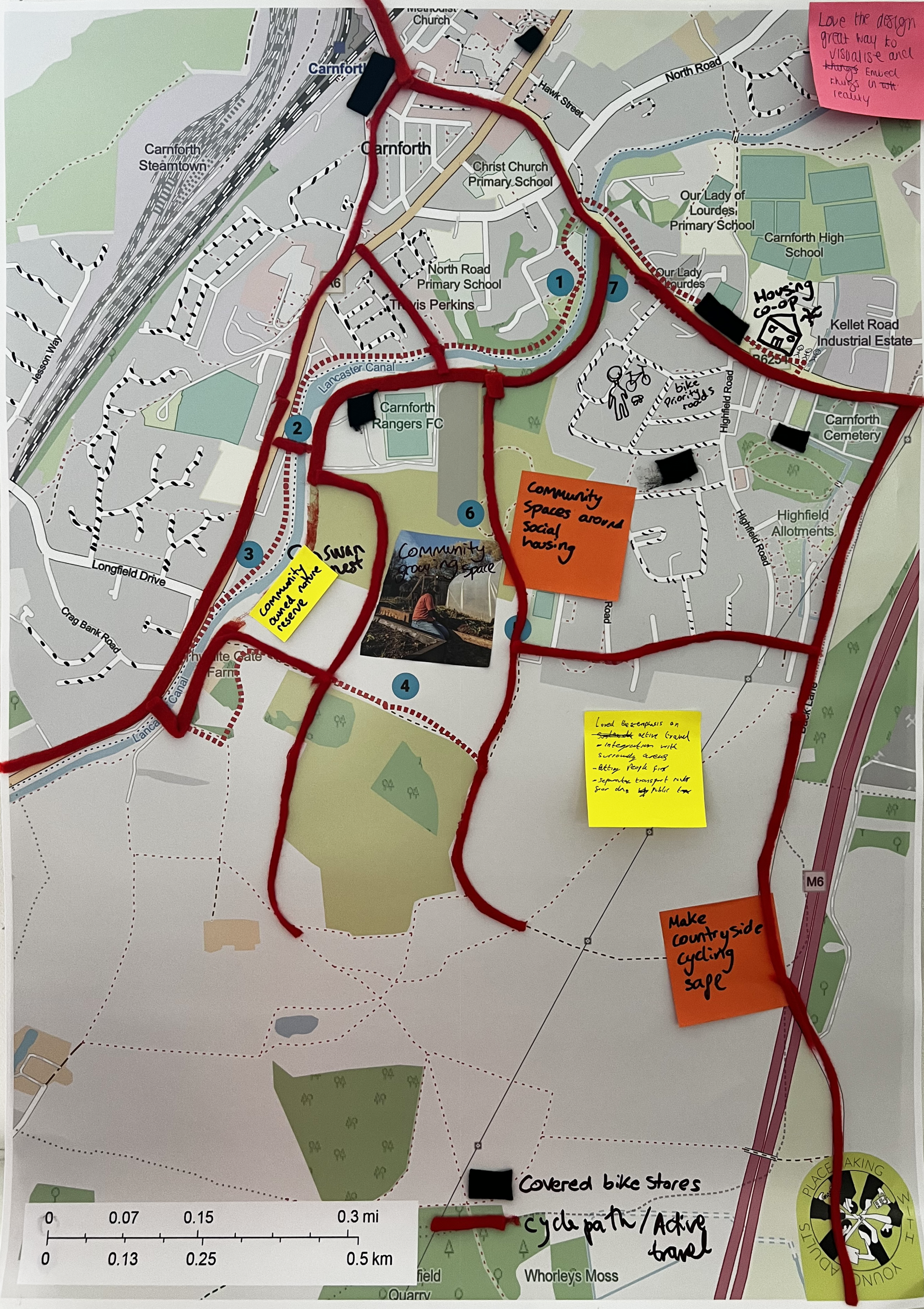
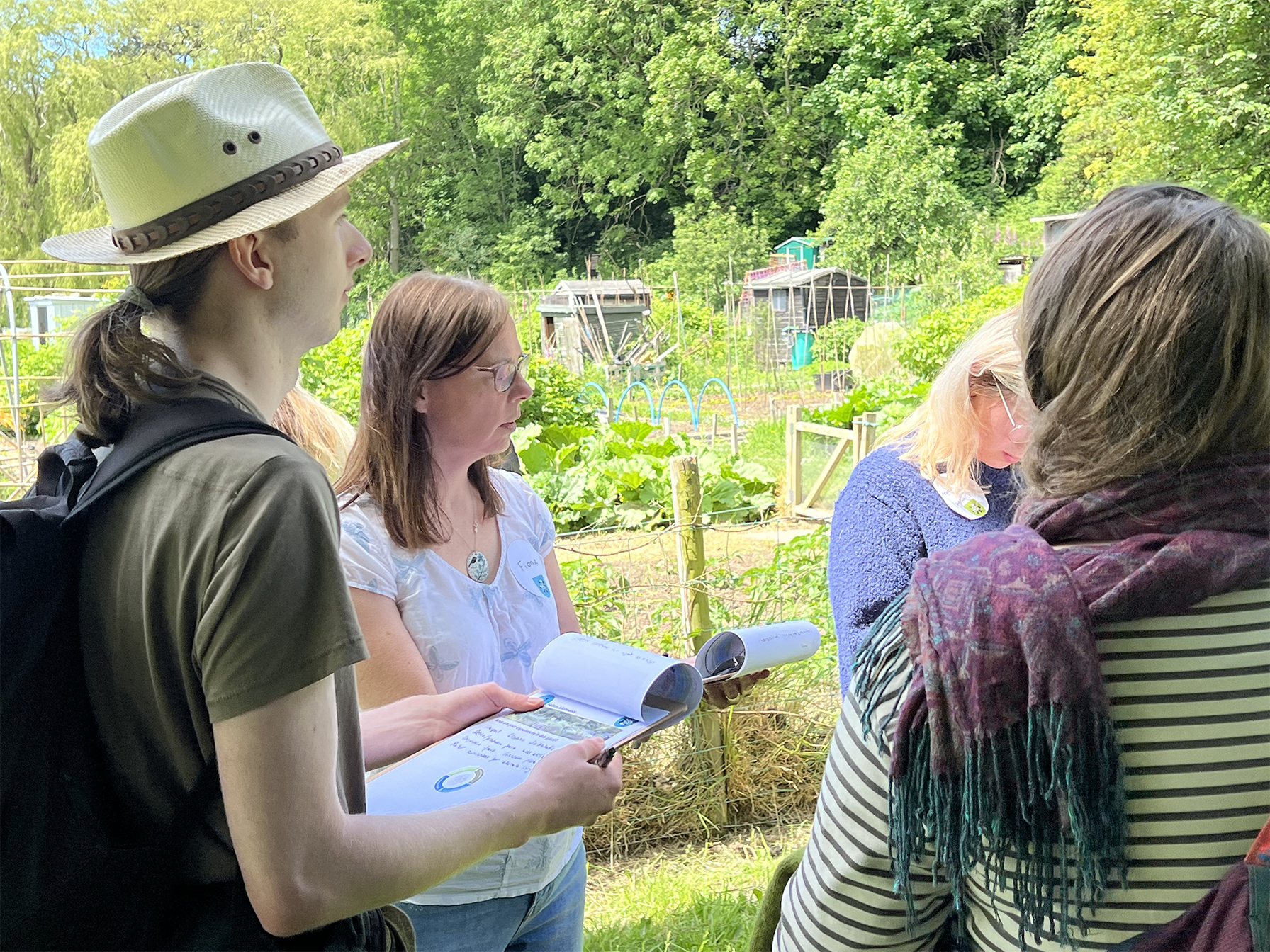
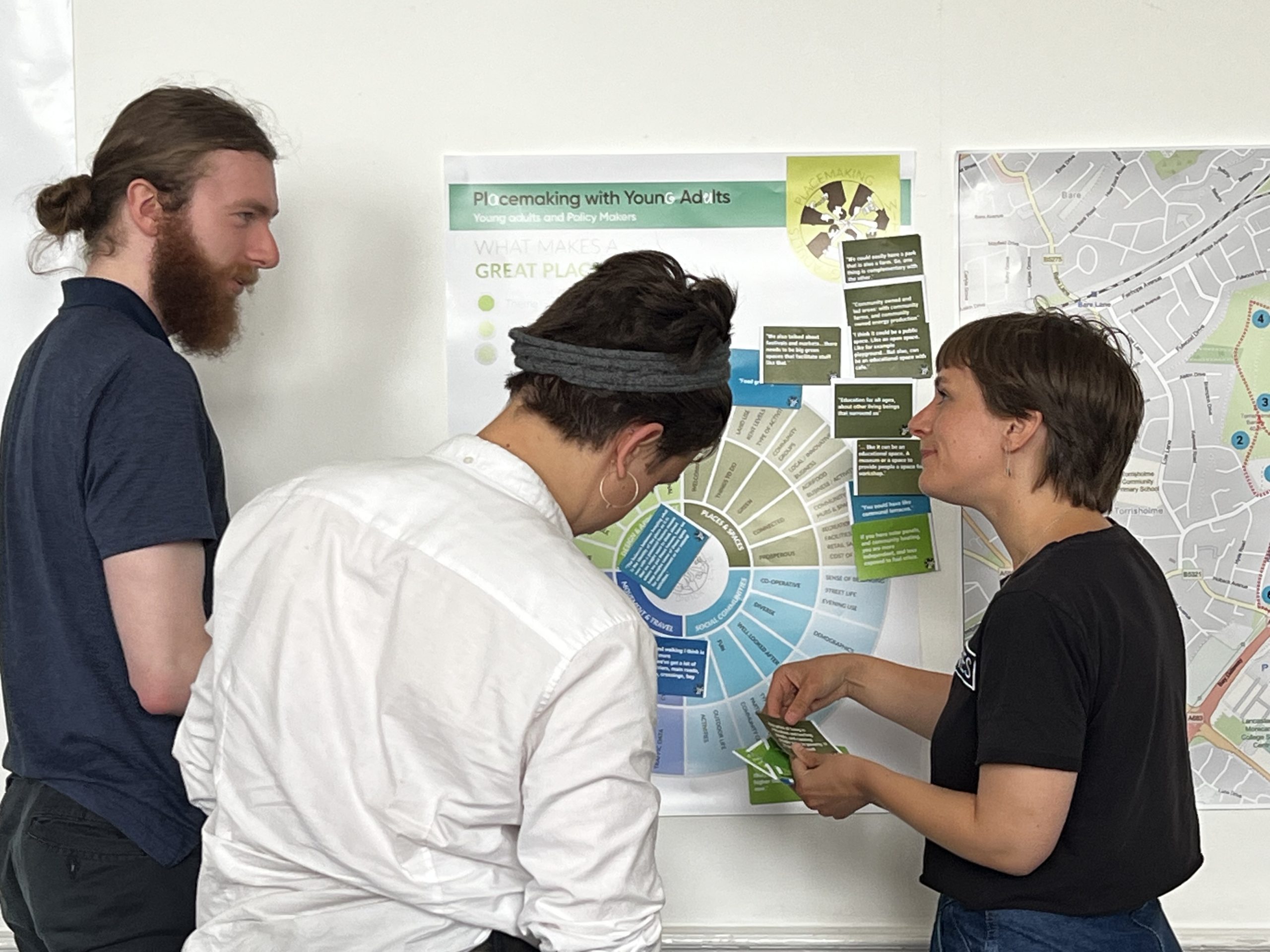
In 2022, I attended my first Placemaking session in Halton alongside a cohort of young adults from the district. At the time, I had only recently started to engage in sustainability through joining a local activism group and founding (a rather wholesome) society focused on hedgehog conservation. In retrospect, prior to the session, I had not once thought about how I might engage in changing my local area, thinking very cynically, that planning was simultaneously failing to tackle the issues I cared about while also caring very little about my input on those issues.
Travelling back to my flat at the end of the day, slightly sunburnt, carrying several free plants (which I have just about kept alive), I found myself optimistic that it was possible to make Lancaster a place I could be proud to live in and I could see how I could help make that change possible. By the end of the year, with the final session concluding, I was slightly deflated by the realisation that the dynamics between development and planning, among many factors, meant that systematic change to a more sustainable way of living would be slow and fiercely contested. This was the uncomfortable meeting point of idealism and realism everyone will encounter at some point in their lives particularly when working in sustainability. While much more knowledgeable than when I started, I was unsure whether the placemaking principles would translate into anything meaningful outside the sessions.
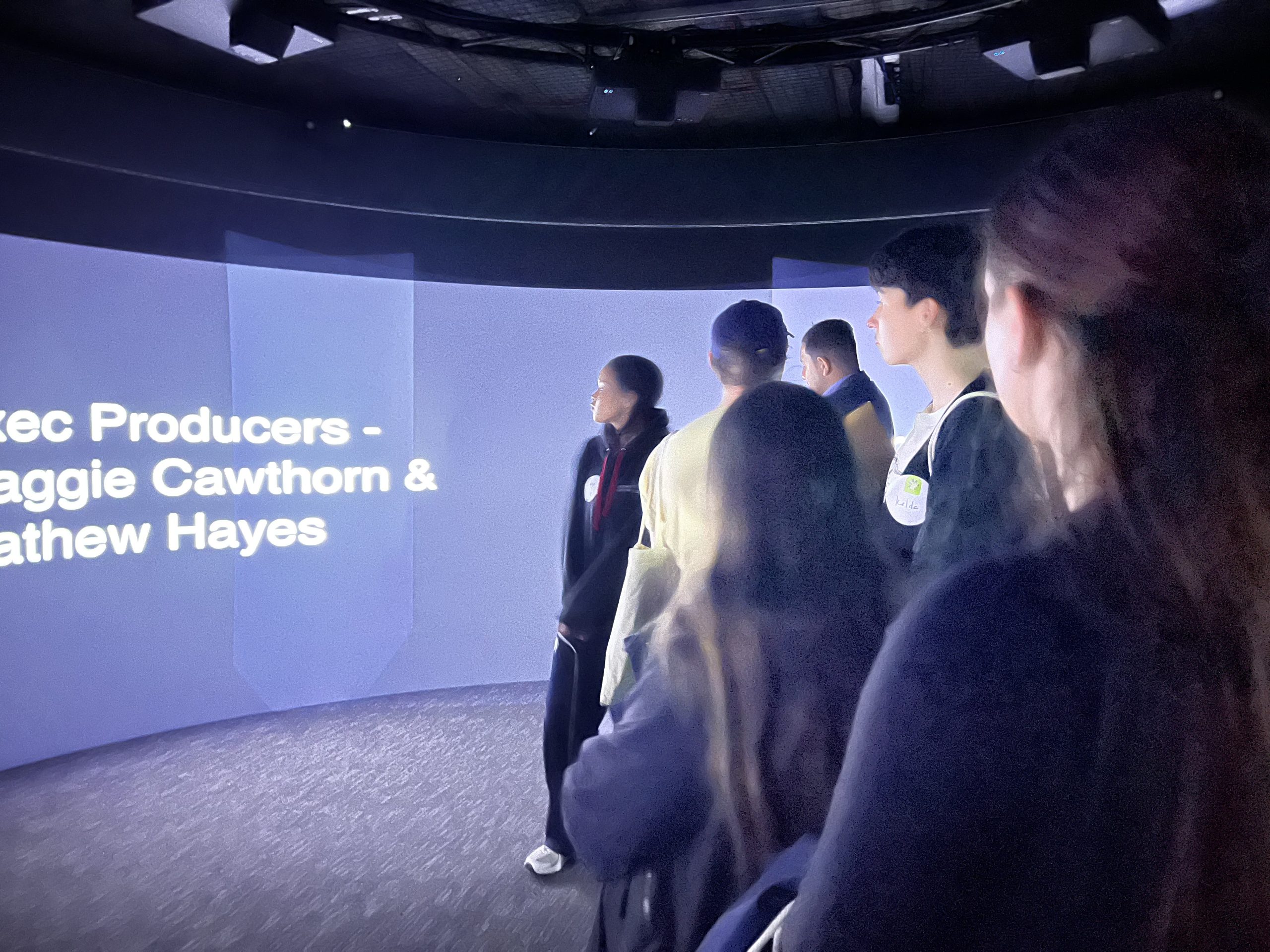
This is exactly what I reflected on ahead of the second round of placemaking sessions in 2025. What struck me most was that all the people who engaged in the first round of placemaking had already gone on to make a real impact in Lancaster and beyond. A group of students and recent graduates had become a network of activists, researchers, ecologists, consultants, educators, even councillors working toward the shared vision we had developed. This network doesn’t exist in isolation, integrating with not only the placemaking team, but spreading out both nationally and internationally tackling the polycrisis across various sectors. Placemaking helped me to transition from my degree to working in sustainability at Green Lancaster and now Small World Consulting where I have worked on the council’s decarbonisation strategy alongside many of people running the first session in Halton. Staying in the district, I have integrated with the community spaces and food networks introduced during the process and found myself living more communally, feeling healthier, and more fulfilled by the places I had previously taken for granted. With the new round of placemaking having a clearer scope, being integrated into the development of a new local plan for the district, the mechanisms for change are more realised than ever before.
While I am under no illusion that the placemaking process alone can solve all the problems we face locally and as a society, the more we engage and inform people, such as through the placemaking framework, the stronger and more diverse our communities become. Together we can reimagine the places that we live in and take the steps necessary to make those ideas become a reality.
Author: Morgan Nielson, PYA1.0 Participant, PYA2.0 Research Assistant
 Mirian Calvo