
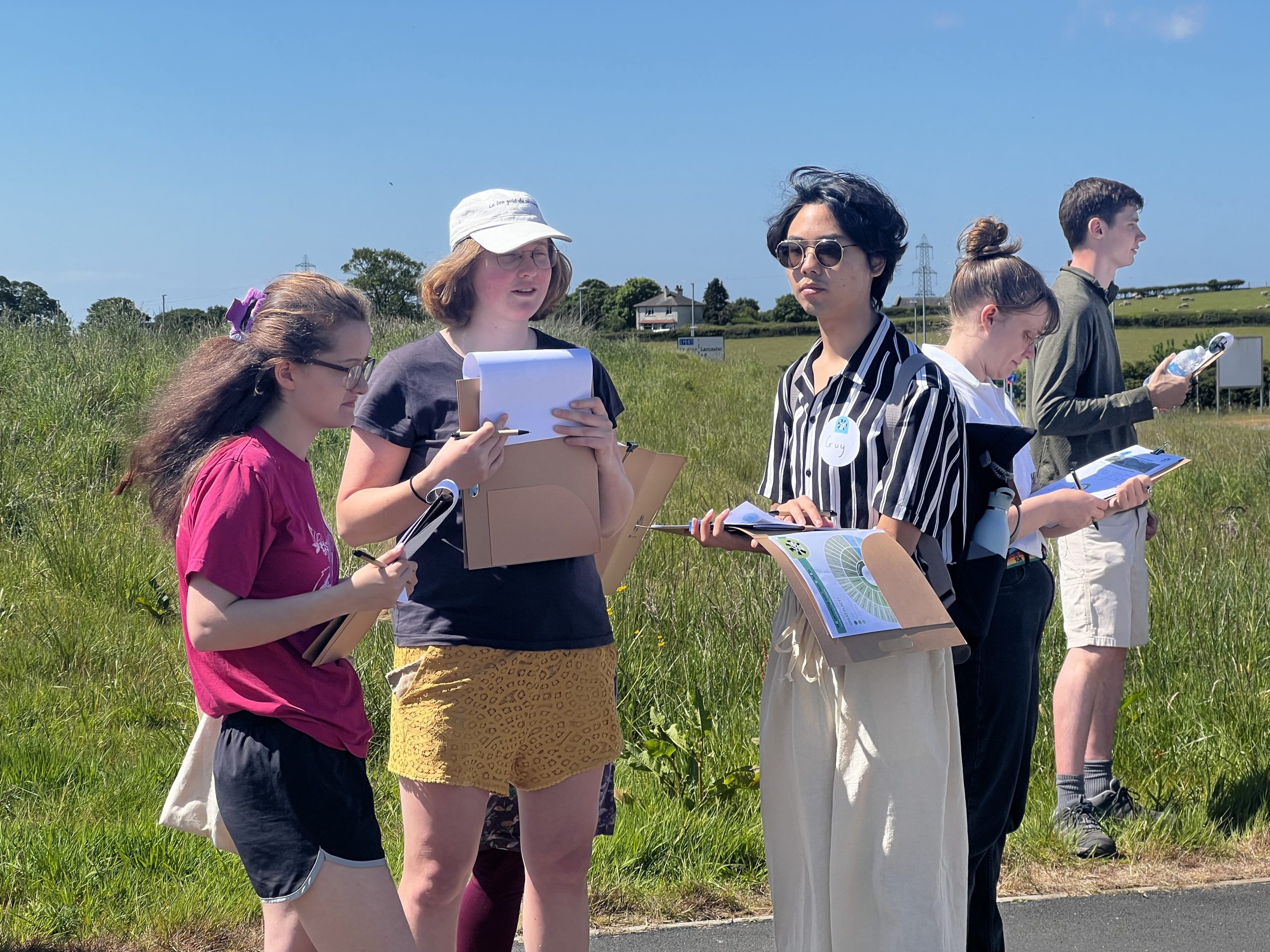
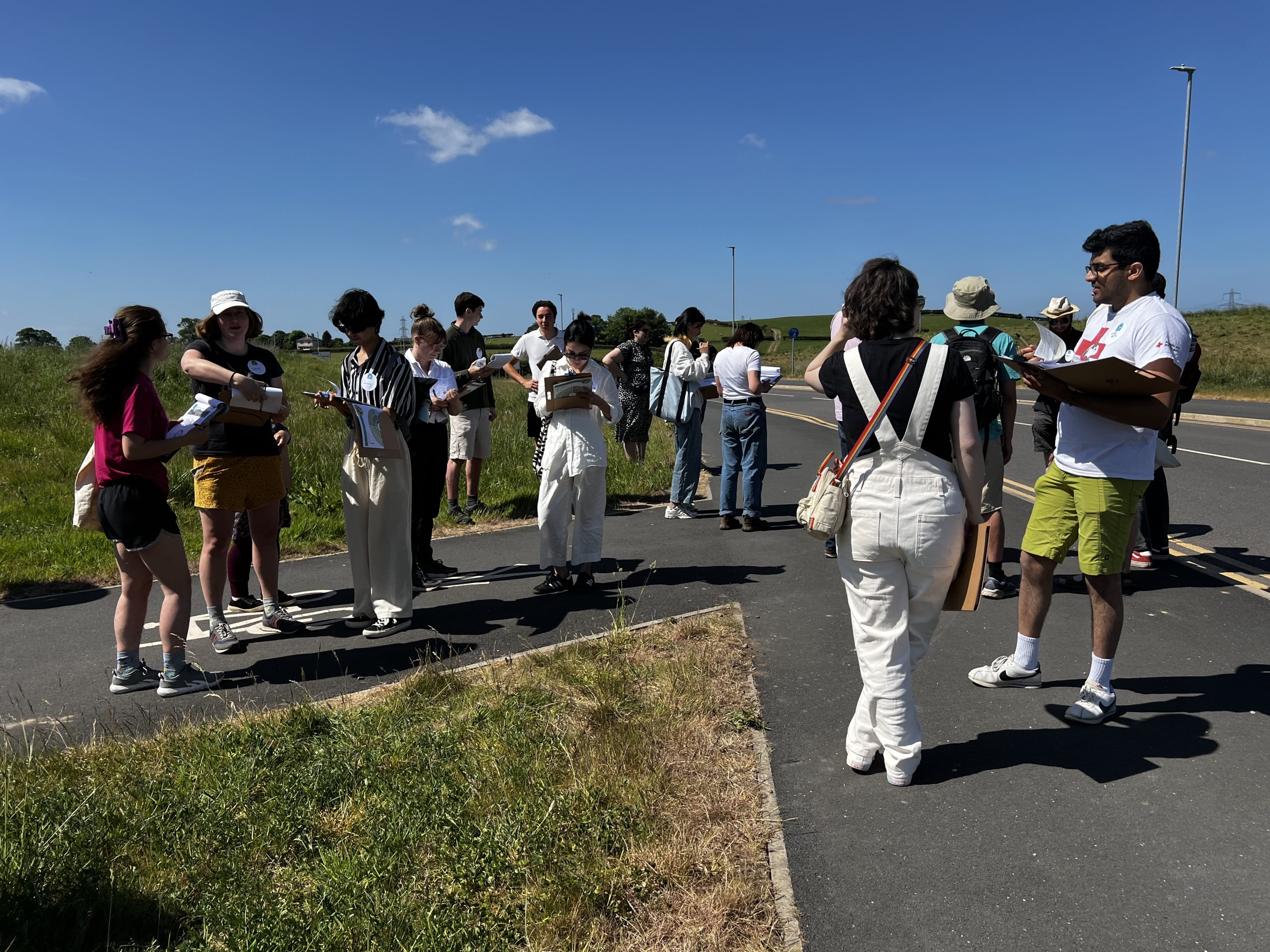
The Lancaster WALKshop held at Lancaster Health Innovation Centre on Saturday 17th May followed on from the Carnforth WALKshop. Using the exact same format and Placemaking Framework as in Carnforth (see previous blog), the Lancaster WALKshop brought together young people from across the district to explore their visions for the future of the area.
The route consisted of five stops, each chosen to spark discussions around the placemaking framework categories: Design & Appearance, Places & Spaces, Social Communities and Movement & Travel.
Stop 1: Health Innovation Campus
We began our journey at the Health Innovation Campus, where conversations about good design quickly turned into reflections on what shapes wellbeing. The wide, accessible paths, cycle routes and thoughtful greenery were not just noticed but valued. It highlighted to me that people intuitively connect walkability and environmental design with quality of life. What struck me most was how naturally the group framed these features as essential rather than optional. It raises an important challenge for future development. How do we ensure that this balance of infrastructure and greenspace is not the exception, but the baseline standard.
Stop 2: Whinney Carr Trig Point
From the Innovation Campus, we headed towards the Trig Point at Whinney Carr. The walk up to the trig point allowed time for discussions which was great to see. Once we arrived at the trig point, we had expansive views across the district. Looking out towards town, we began to grapple with the question of connection. How can such a hilly, elevated space be better linked to the rest of Lancaster? The site is in close proximity to the M6 and Westcoast mainline but how can it be connected? The topography of the site raised issues of accessibility, but also offered unique opportunities for views, green corridors and creative transport solutions. It was also discussed what role developments such as the new Hospital site could play in shaping the area. The site is currently being used for pastoral farming and so this triggered conversations about food production and creative ways in which we can encourage food production in developed spaces.
Stop 3: Burrow Beck & Bridge
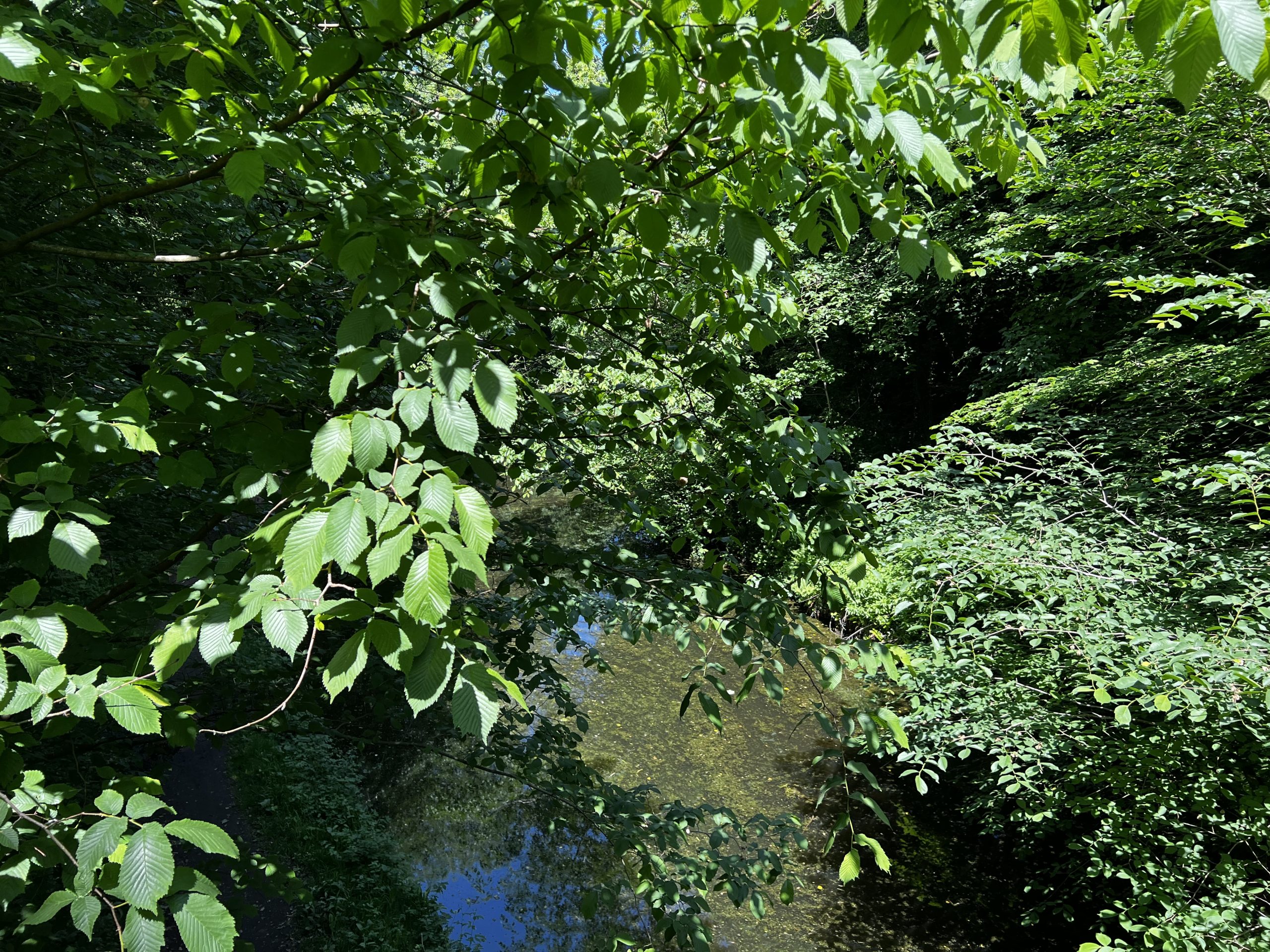
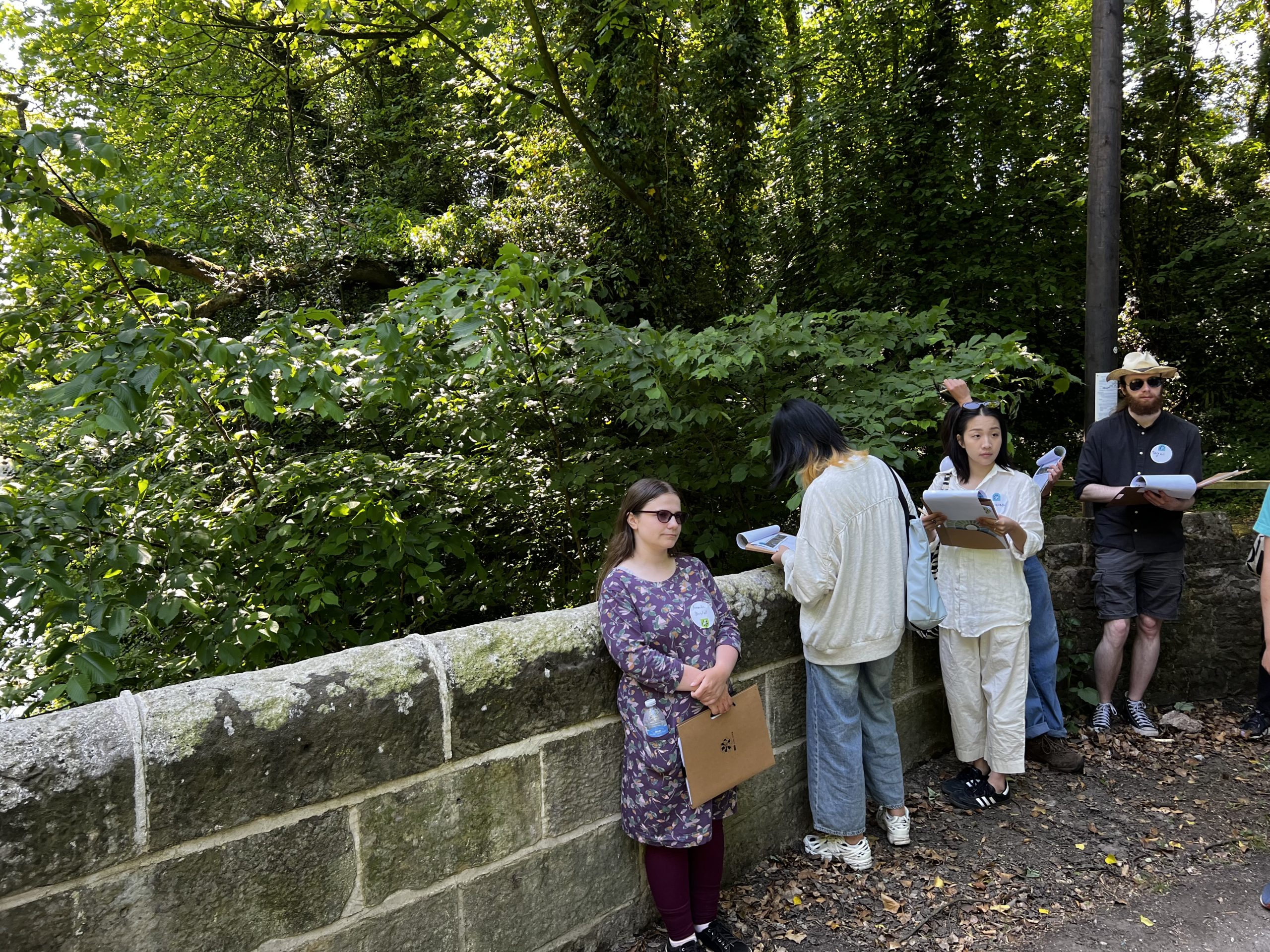
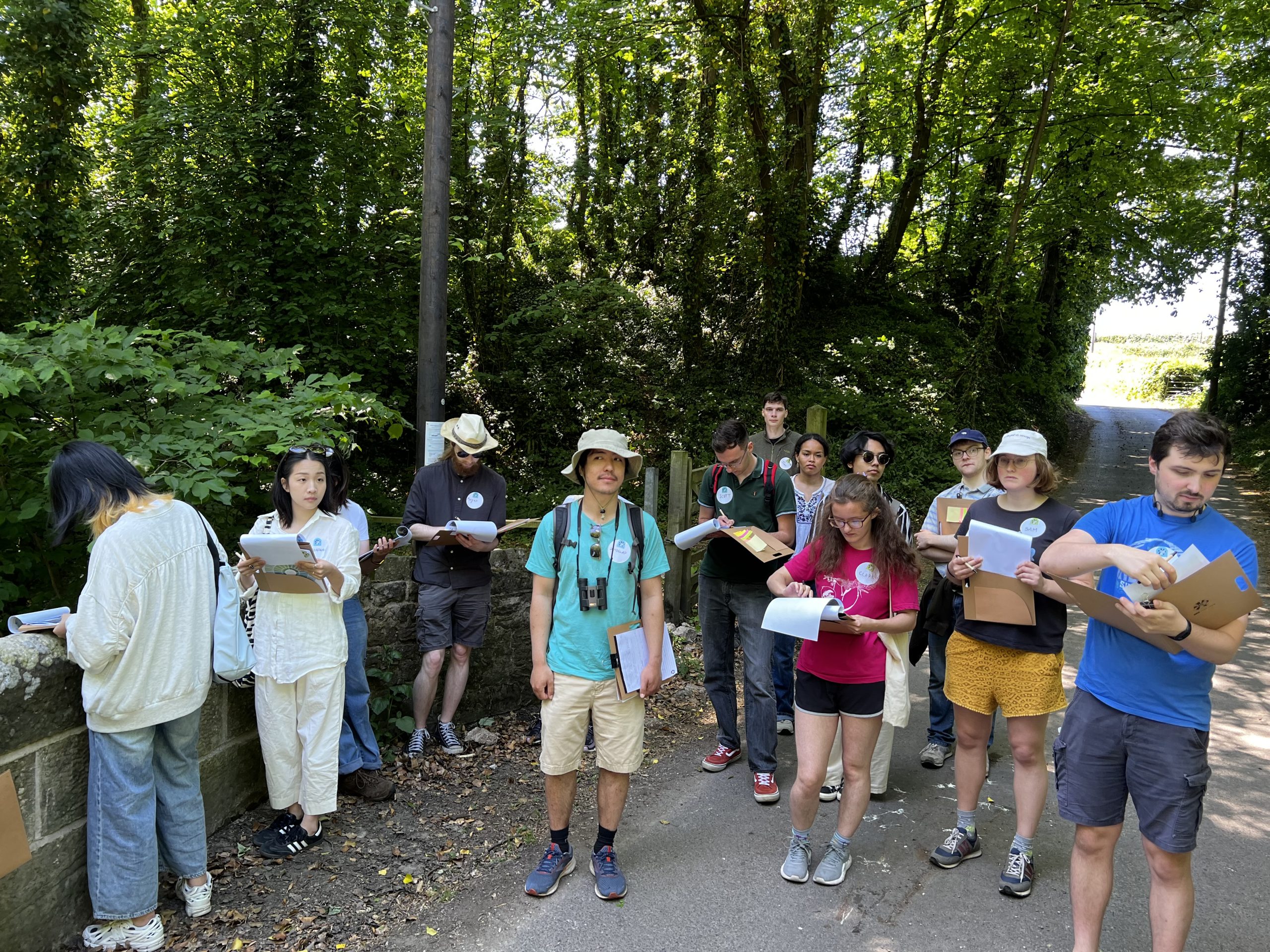
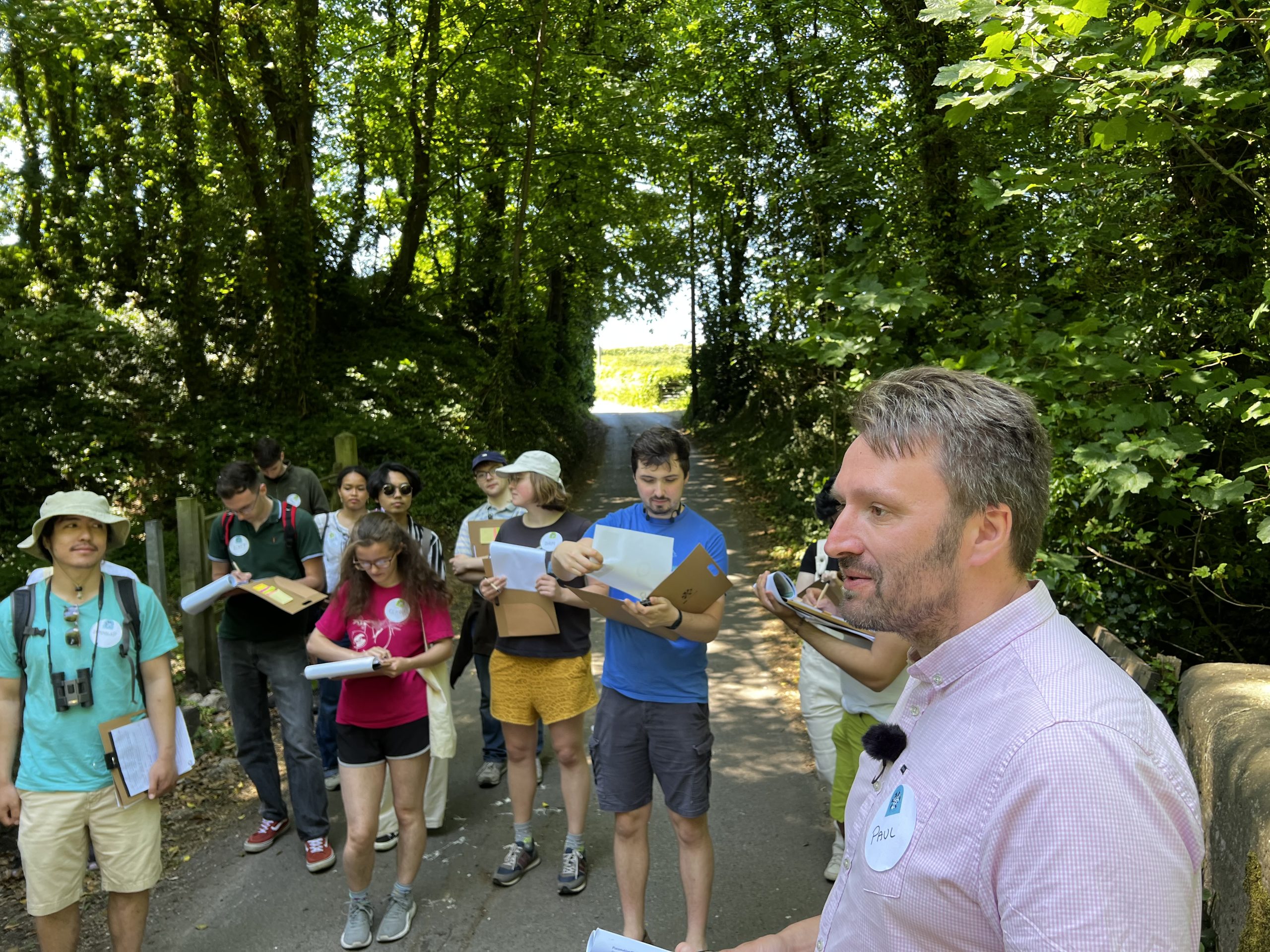
Next we gathered at Burrow Beck, where conversations turned to water, specifically the risk of flooding and how placemaking could creatively address this. As a Planner, I found the feedback from the group both useful and eye-opening. They brought fresh perspectives, sharing examples from other flood resilient community spaces and creative forms of built infrastructure such as regenerative, natural bridges. What struck me most was peoples instinctive view that flooding should not be treated solely as a constraint, but as an opportunity for innovative, climate conscious design. Hearing these ideas challenged me as a Planner to think less about mitigation and more about creating spaces that are adaptable, resilient and socially engaging. The groups willingness to envision creative solutions is a reminder of how valuable it is to incorporate the insights of young adults into the Local Plan. They push professional assumptions, broaden design conversations and highlight opportunities that might otherwise be overlooked.
Stop 4: Whinney Croft
As we arrived at Whinney Croft, a different kind of tension emerged between development and rural identity. It was highlighted that current features such as pylons and power infrastructure might be a constraint to the type of development that could occur on site. It was also noted than any development would have to be mindful of the existing housing present and not erase the landscape that makes the site unique.
Stop 5: Lancaster Canal
Our final stop at the Lancaster Canal prompted rich conversations about sustainable travel and biodiversity. Here, I found the groups ideas particularly insightful. They did not just see the canal as a scenic feature, they imagined it as an active green corridor and a biodiversity haven, showing a keen awareness of how natural spaces can serve multiple purposes. They brought forward issues around how new development could respect heritage assets like canal bridges whilst at the same time improving access. Their questions around how to balance the old with the new. How do you incorporate the old and new without compromising either? As a planner, it was useful seeing how they approached a familiar space with a fresh set of eyes. They considered heritage, access, ecology and community experience all at once, rather than in isolation. Their perspectives encouraged thinking around how we can make infrastructure multifunctional, inclusive and resilient, not just efficient or good for now. For the Local Plan, these kinds of future focused insights are invaluable.
Food & Debrief
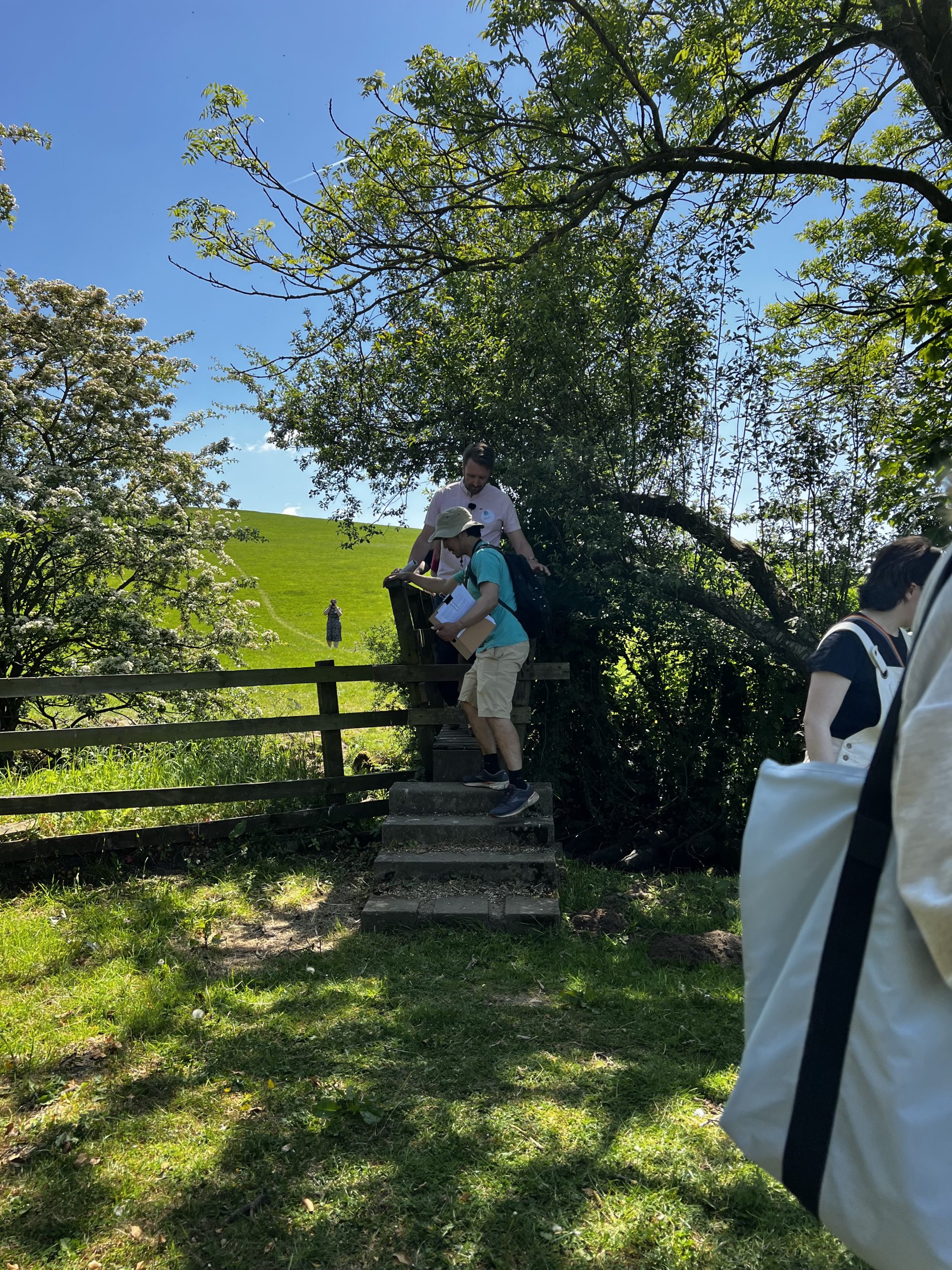
By the end of the walk, feet were tired, but spirits were high. When we got back to the Innovation Campus, we all provided our key insights from the walk whilst refuelling on the food that had been delivered. For many of the young adults involved, this was their first experience of being asked what they want their area to look and feel like in the future and it was extremely interesting to hear their visions and ideas from the walk. The WALKshop was a step (quite literally), towards more inclusive, grounded planning. Their creative and clear contributions will be extremely valuable when it comes to producing the Local Plan.
 Mirian Calvo